


The week of Oct. 20-24 is National Transfer Student Week, focusing on students who start their higher education at a community college, trade or vocational school, who then transfer to a four-year college to complete their bachelor degree. While continuing their education after high school, students can also take core classes at a lower cost and transfer those credits to a four-year college. It’s a smart way to save money on their education and still reach their goal. And a 529 plan can pay for the qualified costs at community colleges, trade schools, as well as colleges.
Community colleges and trade/vocational schools provide their students with a valuable education. Earning a degree or certificate from these institutions of higher education, it’s a great way to launch into a professional career.
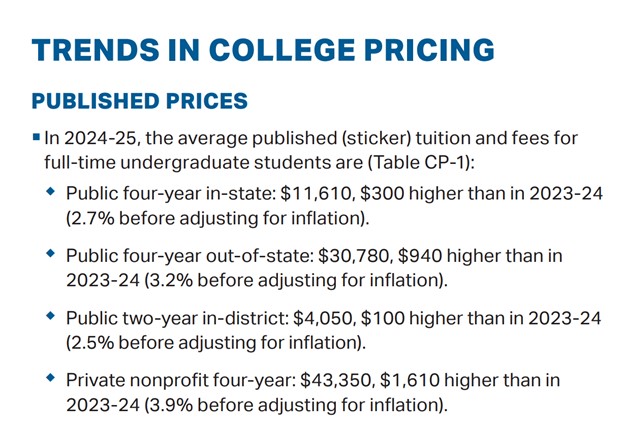
If you look at the national average price of a credit hour, community college ones costs $150, while the average cost at a four-year public, in-state university is $406. If your child earns 10 credit hours at a community college on transferable core classes, the cost could be around $1,500. If your child took the same 10 credit hours of core classes at a four-year college or university, the average cost could be $4,060 or more. With this example, by taking the same required courses at a community college, you could still have $2,560 in your 529 account for future use.
Like saving in a 529 plan, the key is starting the transfer planning process as early as possible. If your student plans to start their academic studies at a community college to then complete it at a four-year program, let the community college’s academic advisor know before enrolling there. The counselor can guide your student to the four-year programs with which they have transfer agreements, and which courses are guaranteed to transfer and be applied to their bachelor’s degree. After your student has taken the core requirement classes and is ready to start the transfer process to the four-year program, they need to connect with their next school’s transfer office for guidance.
Another avenue for students to gain transfer credits is Prior Learning Assessments (PLA). Students can earn college credits by exam, like tests created by theCollege Level Examination Process or CLEP, and through a portfolio that contains a student’s applicable education learning.
Taking core requirement courses at a lower-priced community college is a smart way to keep money in your 529 account future use at a four-year school. Do your research, use the school’s resources and staff, and you can make the transfer process work well for you and your 529 savings.
If you’d like to learn more about saving for your child’s college or career training with a 529 plan, visit CSPN at collegesavings.org or search for your home state’s 529 program.
About the author:
Trisha Good is the executive director of Ohio Tuition Trust Authority. Since 1989, Ohio Tuition Trust Authority has sponsored and administered Ohio 529 CollegeAdvantage. Ohio’s 529 Plan oversees more than 682,000 accounts and over $19.5 billion in assets as of June 30, 2025. Visit CollegeAdvantage.com or call 1-800-AFFORD-IT (233-6734) for more information.
Luke Minor, Senior Director of Postsecondary Affordability, Washington Student Achievement Council
October 7, 2025
If there’s anything that drives me crazy, it’s earworms! You know – those insidious and hopelessly catchy pop songs pumped out of department store overhead speakers with reckless abandon? We’ve all fallen victim to them, and they typically have a knack for making us want to crawl out of our skin.
But every once in a while, one of these sneaky little buggers has a way of worming its way down into my heart to offer a serene moment where everything feels right in the world. A prime example is Semisonic’s classic alt-rock ballad, Closing Time. I’ve had that darn song stuck in my head for days on end, more times than I can count. Yet every time it comes on, I just can’t help but crank it up, bellow along, and enjoy a moment of glee.
It was fitting that Closing Time was released in 1998 – a year defined by the song’s closing line: “Every new beginning comes from some other beginning’s end.” In 1998, we experienced momentous “beginnings of ends” such as the Seattle Mariners’ last full season in the storied Kingdome and the sobering realization that it was the last year, we could party like it’s 1999 without it being weird and passé. It was also a time of “new beginnings,” such as the launch of a small and inconsequential tech company I’m sure you’ve never heard of…rhymes with “bugle…” But most importantly, to us 529ers here in Washington, 1998 saw the birth of Washington’s first 529 plan – the GET Prepaid Tuition Plan!
While I’ve always liked Closing Time, it was not until recently that I realized that it is, perhaps counterintuitively, an ideal theme song for raising kids and saving for college. Stick with me here. At face value, the song is basically about kicking people out of a bar at, well …closing time. Upon deeper reflection and consultation of the all-knowing Wikipedia, it turns out there’s more going on than meets the eye (err, ear?). For starters, it turns out that the song doubles as a metaphor for a baby being born into the world, as the songwriter was expecting a child while writing the lyrics.
And importantly, throughout the song, we are reminded that coming to an end – whether with something relatively inconsequential and seasonal like the end of summer, or a once-in-a-lifetime moment like high school graduation – doesn’t have to be a time of sadness. Any end is also an opportunity to prepare for a new world of possibilities.
Such is the goal of saving for college and raising a child. We all know time moves in the blink of an eye and only seems to accelerate as the years go by. Along the way, there are unforgettable moments of wonder and triumph as we churn through countless milestones marked simultaneously by tearful goodbyes and inspiring hellos. In the face of it all, it’s important that we take time to pause and reflect, not only to enjoy fleeting moments, but to set goals and take action with intentionality and optimism. [Insert shameless plug to remind you that a fantastic outlet for this intentionality and optimism is to start a 529 account for a child while they’re young and continue making regular contributions over time. It’s never too early to start saving!]
And with that, let’s close out with heeding Semisonic’s semi-philosophic advice that reminds us to plan ahead and support our students in all of their new beginnings to come: ♪♪ “Open all the doors and let you out into the world!” ♪♪
_____________
About the Author
Luke Minor is the Senior Director of Postsecondary Affordability at the Washington Student Achievement Council. In his role, he oversees Washington State’s Education Savings Plans (WA529), which include the GET Prepaid Tuition Plan and WA529 Invest. Since 1998, tens of thousands of students have used more than $2 billion of their WA529 savings to attend colleges in all 50 states and at least 15 foreign countries. In his free time, Luke enjoys getting outside to hike and ride bikes with his wife and rambunctious kindergartner; being terrorized by his new half-border collie, half-velociraptor puppy; and of course, rocking ankle socks while jamming out to all of those late 90s and early 2000s alt-rock classics, in true millennial fashion.
This Fortune magazine headline caught my eye: “Meet a 23-year-old electrician who was a ‘good student’ but skipped college to join Gen Z’s blue-collar revolution. He makes 6 figures.” He may have ‘skipped’ college, but he didn’t skip the training. He earned his training as an apprentice and then became a certified electrician.
The ‘blue-collar’ trend toward workforce training after high school illustrates the many paths to careers in addition to what we traditionally think of as college, including apprenticeships, trade school, vocational training, and professional credentialling. Career training programs can have minimal, and relatively accessible costs. As you think about how to save for the possibility of career and technical education, consider the following:
Make a Plan. Setting an education savings goal can help you stay on target and on track. To make a plan, start with an online savings calculator. Many 529 plans have state-specific calculators that give you an estimate of what future education expenses will be as you set your desired savings goal.
Save Systematically. Whether you set up recurring contributions from a bank or payroll direct deposit, saving systematically is an automated way to build your savings quickly. Consider directly depositing $150 per pay period into your 529 account. After 26 pay periods in a calendar year, you would have nearly $4,000 in contributions to your 529 account.
Adjust as Needed. At least once a year, take a moment to review your contributions, your investment growth, and the needs of your family, and adjust your automatic contributions. Increasing automatically is an option for many 529 plans, but it’s never a bad idea to take the opportunity on 529 Day or during college savings month to boost your contributions. It’s often said that when your child reaches their next milestone (out of diapers, out of daycare, etc.), it’s a good time to increase the contribution amount. Whatever works best for your family, be sure to assess and adjust.
Why this Matters: Making a plan and sticking to it can accelerate your education savings and relieve the financial burden of costs associated with your chosen path when the time comes, especially when you are saving for more than one beneficiary.
About the author: Lael M. Oldmixon, M.Ed. is the Executive Director of the Education Trust of Alaska, which offers Alaska’s three 529 plans, Alaska 529, the T. Rowe Price College Savings Plan, and the John Hancock Freedom 529. She lives in Alaska with her spouse, two children, and two dogs.
September is College Savings Month. May 29 is 529 Day.
It’s not an oversight that Congress, which LOVES commemorative days, has not heralded College Borrowing Month or Student Loan Day. This simple example of two students shows why saving for college is always better than borrowing:
● Amy: Beneficiary of college savings and no student loans. Over 18 years, Amy’s family was able to save $100 per month ($21,600 in total contributions) and had an average return of 6% giving her approximately $38,800 to pay her college bills.
● John: No savings, in need of student loans. With no college savings, John had to borrow approximately $38,800 (at 6% interest rate) to pay his college bills. He started paying $430 monthly for 10 years after graduation and will make approximately $51,700 in total principal and interest payments.
● The result: John paid $51,700 more for his degree than Amy. He also used $430 each month for 10 years to make a loan payment rather than investing in a home, retirement, and/or his children’s education.
● The benefit of savings: Families who can save a smaller amount ($100) each month over a longer period (18 years) enable their students to avoid borrowing a larger amount ($38,800) that needs to be paid over a shorter period (10 years).
The numbers and calculations are less important than the point: saving for college will reduce the total cost of education, better position graduates for future financial success, and maybe even help jump-start their retirement accounts.
How to save
Assuming agreement that “Saving a Dollar Today is Better than Borrowing One Tomorrow”®, the question turns to how best to save for college. Since the first programs were launched 29 years ago, 529 Savings and Prepaid Plans have become the go-to vehicles for college savings, and they continue to grow. 529 data guru Paul Curley at ISS Market Research tells us that on June 30, 2025, 17.3 million 529 accounts were valued at $568 billion, up from 16.8 million accounts with $508 billion in assets under management just one year earlier. An excellent reason to celebrate 529 Day each year!
Before we look at 529 programs, it is worth noting that Coverdell Education Savings Accounts may also be a viable alternative for some families saving for college. Both enjoy tax advantages. Coverdell Accounts have not been widely used because they have income restrictions on who can open them, a relatively low maximum annual contribution of $2,000 per beneficiary, and a requirement to use the savings before the beneficiary reaches age 30.
529 accounts have been structured to provide many incentives for families:
1. No income restrictions: Anyone, no matter their income, may own and contribute to a 529.
2. Significant tax benefits: Unlike brokerage or other taxable accounts, neither the interest and gains on the 529 investments nor the withdrawals for Qualified Education Expenses (QEEs) are taxed. QEEs include just about all college expenses, such as tuition, housing, food, books, supplies, computers, etc. In addition to federal tax advantages, many states also offer state tax credits or deductions.
3. Not state specific. Savers may pick any of the more than one hundred 529 Savings Plans for use at schools in any state. Check 529 Prepaid Plans for restrictions, if any, on where those investments may be used and for options if the student decides not to attend a school for which a prepaid investment has been made. Find and compare 529 programs here.
4. Many uses for 529s. In addition to using 529s for college expenses, approved apprenticeship and certificate programs, savers may withdraw up to $10,000 for K-12 tuition and expenses, and/or payments on student loans.
5. Options for leftover savings. If a student does not go to college or money remains after graduation, the account owner has options:
a. Don’t do anything. There is no requirement to close an account after a student completes school.
b. Allow the beneficiary to roll remaining savings into a Roth IRA. Subject to certain restrictions, beneficiaries may roll up to $35,000 into a Roth IRA.
c. Name a new beneficiary. Account owners may easily change beneficiaries, even to themselves.
d. Make a non-qualified withdrawal. The Account Owner may make a withdrawal for non-qualified expenses, incurring a 10% penalty and paying taxes on the earnings.
6. Financial aid friendly: 529 savings have a minimal impact on financial aid eligibility. Money saved in a 529 Plan reduces financial aid eligibility by 5.64% of the amount saved. For example, $10,000 saved in a 529 could reduce financial aid eligibility by $564.
7. Beneficial for estate planning: Account owners, typically parents and grandparents, prefer 529s because they maintain control over how monies are invested but do not include the 529 accounts in their taxable estates.
Saving for college is an important way to minimize college debt, reduce the overall cost of obtaining a degree, and allow recent graduates to save for their future rather than pay for their past.
® – Invite Education LLC
About the author:
John Hupalo is the Founder & CEO of Invite Education
By Cheryl Rapp, State of Wisconsin College Investment Program Finance Officer, Edvest 529
September 16, 2025
Each September brings a reminder to look ahead and plan for education because it’s College Savings Month. With the cost of higher education continuing to rise, having a clear savings plan in place is more important than ever. One of the most effective tools to help you prepare is a 529 college savings plan.
Understanding a 529 Plan
A 529 plan is a tax-advantaged account designed to help individuals save for education costs. Whether you’re saving for a child, a grandchild, or yourself, a 529 plan offers several advantages:
- Tax-Free Growth: Earnings are not subject to federal income tax when used for qualified education expenses.
- State Tax Benefits: Many states offer additional tax deductions or credits for residents who contribute to their state’s 529 plan.
- Flexibility: Funds can be used at most colleges, universities, vocational schools, specific K–12 tuition and related costs, and registered apprenticeship programs. They can also be used for up to $10,000 (lifetime) toward student loan repayment.
- Low Costs and Choice: 529 plans typically offer a range of investment options, often with lower fees than other savings choices.
Think of College Savings Month as your yearly nudge to take action. The sooner you start saving, the more time your contributions have to potentially grow through the power of compounding, and the less you or your student may need to borrow later.
This is also the perfect time to check in on your savings habits:
- Are you contributing regularly?
- Could you increase your monthly amount by even $10 or $25?
- Have you automated your contributions so that saving happens effortlessly?
Tips to Make the Most of College Savings Month:
- Open or review your 529 account – Now is a great time to start if you don’t have one. If you do, consider checking in on your investment strategy and goals.
- Set up automatic contributions – Regular contributions, even as little as $10 or $25 a month, can build momentum.
- Involve family and friends – Let loved ones know they can contribute to your child’s 529 account for birthdays or holidays.
- Explore your state’s plan benefits – Some plans offer promotions or incentives during College Savings Month.
College Savings Month is more than a reminder for future planning; it’s an opportunity to take real steps toward funding educational goals. Whether you’re opening your first account or adding to an existing one, a 529 plan can help you maximize your savings through tax advantages, low costs, and flexible use options. Your future self or your future graduate will thank you.
About the Author
Cheryl Rapp is the College Investment Program Finance Officer at the Wisconsin Department of Financial Institutions, which oversees Edvest, Wisconsin’s 529 Plan. Edvest has been helping families save for education since 1997. Rapp has over 25 years of experience working for the State as the College Affordability Specialist prior to joining the College Savings Program. Her experience includes educating students, parents, teachers, and school counselors on the value of and how to complete the Free Application for Financial Student Aid. In her current role as College Investment Finance Officer for the Wisconsin 529 College Savings Program, Rapp manages outreach to Wisconsin residents. She works to increase awareness of the plans among Wisconsin residents while helping them begin saving for their children’s higher education. She is a graduate of the University of Wisconsin-Green Bay, from which she earned a bachelor’s degree in Humanistic Studies.
As soon as Baby G was born, my husband and I decided that we needed to be the most prepared grandparents in the history of grandparents. Nana and Pops would win the game of responsible grandparenting and set our little peanut up for future success.
This responsibility worked itself out in a few very specific ways for us. We:
- Own the same stroller and car seat as G’s parents so that transport is never an issue;
- Stock diapers, wipes, and clothes so no “packing of the bag” is required to visit; and
- Opened our own 529 plan as soon as her parents had her Social Security number.
Now that G is the big 3, I can report that numbers 1 & 2 kept things easier for our family and removed stress from exhausted new-parent and eager-grandparent brains. Never having to worry about grabbing the car seat base or forgetting pj’s make hosting our now Big Girl a simple and smooth process.

Simple and smooth is also how I would describe opening our own 529 plan with our granddaughter as the beneficiary. We knew we wanted to select the investments and retain control of the funds, so we opened our own account very early. This has worked great for us, allowing a long-time horizon for her investments to grow. We anticipate a solid financial start, early conversations about education and career choices, and the satisfaction that she’ll have less student loan debt.
Most importantly, we’re modeling investing behavior across generations. While the trips to Disney are fun, we know that planning for her future with a 529 account is truly the ultimate grandparent flex.
About the Author:
Marissa Rowe is executive director of the Indiana Education Savings Authority, which administers the Indiana529 savings program with more than $8.4 billion in assets under management in three plans. A proud first-generation college student, Marissa received her B.A. in Mass Communication from the University of North Carolina at Asheville and her M.A. in Philanthropic Studies from the Indiana University Lilly Family School of Philanthropy. She paid off her student loans in 2020 and has 529 plans for her nieces and granddaughter.
Devon Copeland, Senior Communications Associate, Invest529
September 3, 2025 (reprinted from September 3, 2024)
Do you ever find yourself having a chat… with yourself? Well, I do! Especially when it comes to big life decisions—like saving for college. A couple of years ago, I had one of these “talks,” and you know what? It actually helped! So, I thought I’d share that inner dialogue in case you’re also wondering, “Is saving for education really that easy?” Spoiler alert: Yes, it is. And with College Savings Month here, there’s no better time to start!
Me #1: Okay, self, we need to talk about saving for the kids’ education. We’ve been putting it off for a while now.
Me #2: Ugh, I know… But doesn’t it sound a bit… complicated? And expensive?
Me #1: That’s precisely why we need to get a handle on it now. And guess what—I’ve done some research. Turns out, a 529 account could make it a lot simpler.
Me #2: Oh, I’ve heard of those! But what makes a 529 account so special?
Me #1: Well, for one, it’s super flexible. You can use it for a wide range of educational expenses—like tuition, books, room and board, and even some K-12 expenses. Plus, it’s not just for traditional four-year colleges. Trade schools, apprenticeships, and even online courses are covered!
Me #2: Hold on. So, I can save now, and the kids can decide later whether they want to be doctors or auto technicians?
Me #1: Exactly. And here’s another cool thing: the money grows tax-free. So, every dollar we put in has a chance to grow more quickly over time without Uncle Sam taking a cut. When it’s time to use the money, we won’t pay taxes on the withdrawals if they’re for qualified expenses.
Me #2: I do like the sound of that! But how much do we need to start?
Me #1: That’s another great thing. You don’t need a ton of money to get started. Most 529 accounts let you open one with a small initial deposit, and then you can contribute as little or as much as you want, whenever you want. It’s totally up to us.
Me #2: Wait, so I could start with, like, $25?
Me #1: Absolutely, or even less! And we can set up automatic contributions to keep it going without even thinking about it. It’s like a “set it and forget it” situation, which is perfect because… well, let’s be honest, we always have a lot going on.
Me #2: That sounds manageable. But what if we don’t end up needing all the money?
Me #1: Great question. We can always change the beneficiary to another child or even to ourselves. Maybe I’ll finally take that pastry course in Paris!
Me #2: Ooh la la, now you’re talking!
Me #1: See? It’s really a win-win. Saving for education doesn’t have to be hard or scary. It’s all about getting started and doing what works best for our family.
Me #2: Okay, I’m convinced. This actually sounds easier than I thought. Let’s do it!
There you have it—my inner dialogue that led to some real savings! If you’ve been on the fence, maybe it’s time for you to have a little chat with yourself, too. Because with a 529 account, saving for education can be simple and rewarding. This College Savings Month, take the plunge. Your future self—and your kids—will thank you for it!
About the Author
Devon Copeland is the senior communications associate with Commonwealth Savers (formerly Virginia 529). Commonwealth Savers makes education more accessible and affordable for families and individuals. For more information on Commonwealth Savers education savings options, visit Commonwealth Savers.com or call 1-855-4SaveVA (1-855-472-8382) to obtain program materials.
By Troy Montigney, Vice President, Ascensus
August 27, 2025
Recently, a financial podcast I enjoy covered the notion of making actual progress in your financial life. Sometimes, what feels like moving forward might actually be you treading water – or worse, falling behind.
The hosts (and this listener) agreed that the time of life when you’re responsible for young children, particularly ones with significant daycare expenses, is universally a time when it’s tough to move forward. If you’ve ever felt or are currently feeling this way, you’re not alone.
Saving for anything, especially education expenses 15-20 years down the road, can feel overwhelming when you’re otherwise rolling off the back of the financial treadmill. With the huge disclaimer that what worked for one person or family might not necessarily work for the next, here’s how we’ve maintained our commitment to saving amidst annual five-figure childcare expenses (I’ve got mild PTSD just writing that):
Start as early as possible
This one is a no-brainer, but for many, it’s easier said than done. We opened 529 plans for our kids as soon as we had their Social Security Numbers in hand. In each case, we didn’t immediately ship our babies off to daycare – thanks to a mix of parental leave and family support, the first months of life didn’t feel like a financial disaster waiting to happen.
Because of this, we budgeted for recurring, automatic contributions to their accounts. Make no mistake, financial stress eventually came; but when it did, our kids’ 529 plans were a sticky part of our financial life. We sacrificed elsewhere to maintain our plan, all because we started early.
Flip “artificial raises” into actual savings
Most daycare centers and preschools, and certainly each one our family has utilized, charge more to take care of younger children. Think of it as a diaper tariff or bottle tax. The idea is infants are harder to care for than toddlers, who are harder to care for than preschoolers, and so on.
The result of this fee structure is a series of what feel like raises along the way. Even when your income doesn’t change, there’s a little more of it unspoken for once your little one moves down the hallway to a new room. Each time one of those moves happens, you can either absorb the money into some other category of spending or put it to work with intention. We chose to repurpose our freed-up daycare money as extra 529 contributions.
Whether you do that, or up your retirement savings rate, or pay down other debt, the point is to not squander the artificial raise. Put it toward whatever moves your financial life forward.
Enlist your village
Whether your village is family-oriented, full of friends near and far, or centered around your physical neighbors, it takes one to get through the early childhood years. And that village will show up time and time again for the countless birthday parties you host for your kids.
Keep in mind nearly every 529 plan offers simple and intuitive gifting experiences for your village. Before you reply to the next “What does Jack / Emma want for their birthday?!” text with a $25 toy or outfit, send a link or code to their 529 plan’s gifting platform. It should be noted this has the added benefit of helping to declutter your home at a time when every object known to Amazon will find its way inside your walls!
Pay monthly instead of weekly
File this under “super specific advice that may not actually apply,” but for us, it made a tremendous difference! The early education center where we spent most of our daycare dollars defaulted to weekly billing. Every time there was a month with five weekly payments instead of four – often conveniently around the holidays, or a birthday, or a family vacation – we felt every bit of it.
It turned out the center could easily switch us to prorated monthly billing and were happy to do so. If you already pay monthly, congratulations – saving is a little easier for you. If you pay weekly, take a closer look at whether paying monthly might help you get ahead.
As we approach the day when both our kids attend the same elementary school, I find myself happy to have daycare expenses nearly in the rearview mirror. (Sentimental dad interlude to say I would still give anything to relive the past six years!) More importantly, I’m proud of the steps we took to keep up with our 529 savings goals along the way. You don’t have to take the same ones we did, but I promise that if you take some, you’ll feel pride in your progress too.
About the author
Troy Montigney is the proud father of 529 Day baby Sophie and her younger sister Molly. By day, he is Vice President of State Retirement Programs at Ascensus. Previously he served on its industry-leading 529 team, which helps over 8 million people save for education via 51 plans serviced across 32 states and the District of Columbia.
Please note: A plan of regular investment cannot assure a profit or protect against a loss in a declining market. This testimonial is not necessarily representative of the experience of other investors and is no guarantee of future performance or success.
August 20, 2025, marks the date 29 years ago that the Small Business Job Protection Act of 1996 was signed into law – the bill that included language for the original IRC Section 529. So, this week we celebrate “529 Plans at 29” – programs which have positively impacted millions of lives and are also maturing just as the students and families we serve age and mature.
The Early Years
State action providing tax-advantaged programs to help families plan and pay for postsecondary education started in Michigan and Florida in the 1980’s. From that beginning, states across the country developed similar programs. My journey with education savings began in 1994 when Virginia passed legislation creating the Virginia Higher Education Tuition Trust Fund (now Commonwealth Savers) and prepaid tuition contracts. I helped develop the program as a Senior Assistant Attorney General for Finance and Tax when this new entity with only a statute and a fiduciary board became my client. With a lot of assistance from our colleagues in Florida, Michigan, Alaska, Pennsylvania, and Texas, who by that time had already begun their journey, we launched a prepaid program in 1996 – just in time for 529s to be recognized at the federal level.
I have been privileged to be front and center over the last 29 years as these programs evolved – becoming more flexible and affordable pathways to better futures for families. The 1996 bill authorized not just the defined benefit prepaid tuition programs which states like Virginia had already opened, but savings programs more like a defined contribution IRA or 401(k) plan in the retirement arena. This expansion made all the difference and helped both kinds of 529 programs expand rapidly.
Cooperation and Collegiality Succeed
With Congress recognizing the importance of planning and saving for future education needs by providing favorable tax treatment to these mostly state-run programs the rapid growth of 529 programs was almost ensured. The states charged with administering 529 programs and their private sector partners picked up the mantle and took off, providing cost effective, professionally managed new solutions for families struggling with the ever-rising cost of education.
The last 29 years have brought many changes to 529 plans – but what is consistent is the collegiality and cooperation among the states in building and strengthening 529 plans. The College Savings Plans Network, established in 1991 in advance of federal action, has been an integral and crucial part of the 529 growth story. CSPN, which I am honored to chair this year, provides a space and forum for state program administrators and their partners and other interested stakeholders to come together and share ideas on about strengthening our plans and broadening their reach. That activity happens through legislative and regulatory advocacy, development of transparent disclosure principles, and through sharing ideas for outreach, marketing, governance, and investment management to make every plan better and stronger.
Legislative Wins
And oh, have we advocated – successfully and steadily and to excellent effect! In 2001 – a short five years from original adoption – federal action made qualified distributions from a 529 account completely tax free. Previously, gains were taxed on distribution to the beneficiary at a usually lower tax bracket than the account owner. This change made a popular program even better. When the EGTRRA provisions were made permanent in 2006 (in the Pension Protection Act) after tireless work by CSPN members and the individual states, growth in 529s really soared – stopped only briefly by the recession of 2008 and 2009.
More recently, 529 plan advocates have helped effect even more federal changes – including expanding the potential uses of a 529 account to computers and related peripherals to certain transfers to Roth IRA accounts. Most recently, just a month ago the tax reconciliation bill allowed 529 funds to be used for an expanded list of credential and certificate programs, apprenticeships, and continuing education and for an expanded list of K-12 expenses. The cooperation and advocacy of 529 plans across the country, with their partners and the assistance of CSPN, made all these changes possible.
By The Numbers
In 1996 when § 529 was adopted, state prepaid plans had modest amounts of assets – likely under $2 billion. By 1999, three years after 529 enactment, assets in 529 plans had grown to almost $14 billion. Fast forward to 2010, several years after the recession, and assets had climbed to more than $150 billion. Currently, based on data collected and maintained by ISS Market Intelligence, which provides valuable 529 insights and data, 529 plans across the country hold almost $570 billion in assets under management. Quite a success story. A stated goal over the years has been to flip the script on student loans – currently estimated at $1.64 trillion. Work remains to be done, but we are making progress in overtaking that student loan figure so that in future, more money is invested in 529 plans than is held in debt by our students.
What the Future Holds
As we approach three decades of 529 plans, the future looks good with recent federal expansions, but challenges remain. For all that 529 plans have grown and evolved, we still do not reach everyone with the message about what 529 plans can do for them. The structure and fabric of education is evolving, with many pathways to meet the education needs of the technology driven 21st century and there are headwinds to face. Higher education writ large faces uncertainty, with more people questioning the value of a four-year university education, or any postsecondary education, than in previous generations. Even with moderating tuition increases in recent years, the cost of education continues to climb and feel out of reach for many American families. The economics of many institutions of higher education are under severe strain – from falling enrollments to federal funding cuts to an aging population with fewer high school graduates.
529 plans and the passionate and deeply committed people who work for them will continue to do what we have done for 29 years – plan, execute and advocate on behalf of our customers and all the citizens of our states. We will provide gateways to the future for millions of students who otherwise might never reach for something new and different. We will provide inexpensive, quality investment options and professionally manage them. We will continue to advocate for positive legislative change to strengthen our programs. We will leverage our voices in the media and across social platforms, through webinars and in community activities to reach people with a message for the future and how education and a 529 account can help reach dreams! We will advocate educational access and affordability for everyone and provide resources in the form of financial education, scholarships, and mentoring to reach students where they are and help them find the right education pathway for them.
About the author:
Mary Morris is the CEO of Commonwealth Savers (formerly Virginia529) and the chair of the College Savings Plans Network.
If you’ve already earned your undergraduate degree and are now planning to head back for graduate school—whether it’s a part-time MBA, a master’s in education, or an advanced certificate, this is for you.
You’ve done college once. You know the costs, the time commitment, and the pressure of balancing school with everything else. Maybe you’re working full-time, managing rent or a mortgage, or paying off student loans. And now, you’re seriously weighing whether another degree is worth it—and how to afford it.
Here’s one tool that can help: a 529 account. It’s not just for kids or parents. It’s a smart, flexible way to save for your own education—and it could help reduce your out-of-pocket costs for grad school.
Why a 529 Account Works for Grad School
A 529 account is a tax-advantaged savings account designed to help cover education
expenses. While many people associate it with saving for a child’s college tuition, it’s also a powerful tool for adults returning to school.
Here’s how it can help:
- Tax-Free Growth: Money in a 529 account grows tax-free, and you won’t pay taxes when you withdraw it for qualified education expenses.
- Qualified Expenses Include:
- Graduate school tuition
- Required books and course materials
- Fees and lab costs
- Required software and technology
- Internet access (if required for coursework)
- State Tax Benefits: In Virginia and many other states, you may be eligible for a state income tax deduction on your contributions.
- You’re in Control: You can open a 529 account in your own name, contribute on your own schedule, and use the funds when you’re ready.
What to Do Next
If you’re planning to start grad school soon—or even just exploring your options, here are a few steps to take now:
- Open a 529 Account in Your Name
If your parents opened one for you years ago, that’s great—but you can also open your own. With Invest529, it’s quick and easy to set up an account where you’re both the owner and the beneficiary. (link to more info)
2. Estimate Your Costs
Use Invest529’s cost calculator to get a realistic picture of your program’s cost.
Look at tuition, fees, books, and any required equipment or software. Knowing your target can help you set a savings goal for your timeline. (link to calculator)
3. Start Contributing—Even a Little
You don’t need to save the full amount upfront. Start with what you can—$50 a month, or even less. Setting up automatic contributions can help you build momentum without having to think about it.
4. Use It Strategically
Once enrolled, you can use your 529 account to pay for qualified expenses directly. Just be sure to keep receipts and documentation for anything you withdraw.
Why Saving Now Still Matters
Even if you’re starting school soon, saving now can still help. Every dollar you contribute to a 529 account is a dollar you may not have to borrow later. And if you’re spacing out your program over a few years, like many part-time or online students, you’ll have time to build up savings between semesters.
Plus, using a 529 account can help you stay organized. Instead of pulling from your emergency fund or racking up credit card debt, you’ll have a dedicated account just for your education.
Take the First Step
Going back to school is a big decision, and a smart one. Whether advancing your career, switching fields, or pursuing a long-held goal, a 529 account can help you do it with more confidence and less financial stress.
So, if grad school is on your horizon, take a few minutes to explore how a 529 account can support your next chapter. Open an account, run the numbers, and start saving. Your future self will thank you!
About the author:
Ivey Brooke is the marketing intern for Commonwealth Savers, formerly known as Virginia 529.