


By Arizona Treasurer Kimberly Yee
May 27, 2025
As many states, like Arizona, experience population and job growth, addressing the need for higher education to prepare a qualified and skilled workforce is essential. Higher education comes with costs. That’s why it’s crucial to prepare families to start saving early for their loved ones’ future education and create a plan and pathway for these savings.
In October 2020, I became the Administrator of the AZ529, Arizona’s Education Savings Plan. Since then, my office has opened over 54,000 new accounts and increased assets by 45%. From day one, it has been my goal to bring this important savings plan to families who have never thought about college or higher education and provide the encouragement that higher educational opportunities are for everyone.
As I travel around Arizona, I meet with individuals in schools, business and education groups, senior citizens, and veteran communities to discuss the benefits of opening an AZ529 Plan. Expanding the awareness of the AZ529 Plan included developing online marketing and materials translated into Spanish and Navajo, which has been an extraordinary success.
Many are unfamiliar with information on eligibility. I share that parents are not the only individuals eligible for tax benefits; any contributor, including grandparents, aunts, uncles, and friends, may receive tax deductions. Additionally, I encourage young professionals who do not yet have their own families to open an account for a niece or nephew or even for themselves, as accounts may be used for ongoing education, including graduate degrees.
I have enjoyed many conversations with families who are now opening their AZ529 Plans with new confidence as they begin the first steps to planning their child’s future, whether their education will be in a university setting, community college, vocational school, workforce development, or apprenticeship program.
Setting up a 529 Plan is more important than ever as college and higher education costs continue to rise. Student loan debt has reached an all-time record high of $1.77 trillion nationally. The funds from a 529 Plan may be used for tuition and fees, books, supplies, room and board, and student internet access at postsecondary institutions across the country. Funds may also be used towards K-12 private school tuition and paying off student loans.
Recent additions by the federal SECURE 2.0 Act have addressed the common question asked by account holders: “What if I put too much into my 529 Plan and my child doesn’t use it all?” Now, 529 Plans allow account holders to transfer up to $35,000 tax and penalty-free to a beneficiary’s Roth IRA retirement account with longstanding 15-year holders of these accounts. This is good news and provides families with financial flexibility and peace of mind.
Making savings easy and accessible, and meeting families where they are positively impacts a child’s education and enhances our future workforce.
On May 29th, or National 529 Day, my office proudly celebrates education savings by surprising a family in Arizona with a special gift. During this time last year, we had the opportunity to surprise first-time parents and their newborn baby with $529 towards an AZ529 Education Savings Plan. As the new parents received this surprise gift and the newborn in their arms, it was a remarkable experience to see the family overwhelmed with joy and emotion.
The gift of a 529 Plan is more than just a financial contribution. It is a long-term investment towards a loved one’s future that will last a lifetime.
About the Author
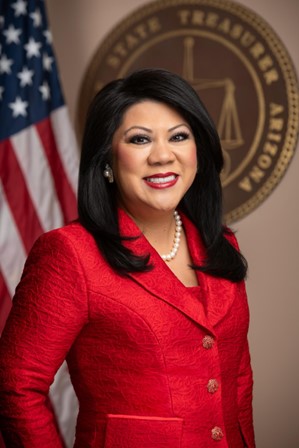
The Honorable Kimberly Yee is the Treasurer of Arizona. When she took office, she asked for the AZ529 Education Savings Plan to be placed under her administration. In a short period of time of 54 months, Arizona’s 529 accounts have increased by 54,178 new accounts with $2.46 billion in AZ529 assets under management. She has reached diverse communities and families in every county of our state and increased access by translating materials into Spanish and Navajo. For more information about the AZ529 Education Savings Plan, visit http://www.az529.gov.
Whether you’re saving for one child or six, use these saving strategies to reach your education savings targets.
Start Early. When you’re managing a budget for a growing family, saving for the cost of future education can be daunting. Let time work on your side by setting aside as much as you can while your children are young. Starting early allows you to make modest contributions that can benefit from compounding interest over time.

Make a Plan. Setting an education savings goal can help you stay on target and on track. To make a plan, start with an online savings calculator. Many 529 plans have state-specific calculators that give you an estimate of what future education expenses will be at your dream college or university. The number you see may feel unattainable, but saving early, often, and strategically can be a great way to reach your goal.
Save Systematically. Whether you set up recurring contributions from a bank or payroll direct deposit, saving systematically is an automated way to build your savings quickly. Consider directly depositing $150 per pay period into your 529 account. After 26 pay periods in a calendar year, you would have nearly $4,000 in contributions to your 529 account.
Adjust as Needed. At least once a year, take a moment to review your contributions, your investment growth, and the needs of your family, and adjust your automatic contributions. Increasing automatically is an option for many 529 plans, but it’s never a bad idea to take the opportunity on 529 Day or during college savings month to boost your contributions. It’s often said that when your child reaches their next milestone (out of diapers, out of daycare, etc.), it’s a good time to increase the contribution amount. Whatever works best for your family, be sure to assess and adjust.
Why this Matters: Funding post-secondary education can seem far away when your children are still in diapers, but 18 years can fly by. Making a plan and sticking to it can accelerate your education savings and relieve the financial burden of post-secondary education when the time comes, especially when you are saving for more than one beneficiary.
About the author: Lael M. Oldmixon, M.Ed. is the Executive Director of the Education Trust of Alaska, which offers Alaska’s three 529 plans, Alaska 529, the T. Rowe Price College Savings Plan, and the John Hancock Freedom 529. She lives in Alaska with her spouse, two children, and two dogs.
Photo courtesy of Lael Oldmixon. Pictured are her two beneficiaries, who are no longer this small.
By Rachel Biar, Deputy State Treasurer for Savings Programs, Nebraska & Past Chair, CSPN
March 15, 2025
Cue the gowns and tassels: Graduation season is officially here!
Whether your loved one is graduating from kindergarten, elementary, middle school, or high school, he or she has achieved a milestone that is cause for celebration.
This year is a special year for my family as my oldest nephew graduates from high school this month. Like so many of you this time of year, I am amazed at how fast time flies. I still remember opening his 529 plan savings account when he was just a baby. It has been joyful to watch him grow, learn, and become an energetic, intelligent, driven, and kind young man. As we celebrate this special graduation milestone, he will receive an extra contribution into his 529 plan account to help prepare him for college this fall.
As you think about the graduates in your life while browsing the aisles searching for the right gift, consider a contribution to a 529 account. 529 plans make it easy to show loved ones how much you care. A 529 contribution can make a meaningful graduation gift at any age.
Kindergarten Graduates: Give the Gift of Time
In kindergarten, higher education may seem like a long way off. But one of the best gifts that you can give your young graduate is an early start on their college savings journey.
Simply put, saving for a longer stretch of time creates more opportunities to contribute and grow your savings. Because 529 account earnings are state and federal income tax-deferred, the full earnings amount remains in your account and grows with no money being subtracted to pay current tax obligations. Consequently, earnings happen more tax efficiently, helping to increase your account value even faster and maximize earnings potential associated with market growth.
Given the structure of compounded tax-deferred growth, it is in every kindergartener’s best interest to get an early start on his or her 529 plan account. This spring help your graduate build that base, and encourage friends and family to contribute as well.
Elementary and Middle School Graduates: Give the Gift of Motivation
Graduating elementary and middle schoolers are eagerly anticipating their next steps, whether that be middle school or high school. Dreaming about new classes, friends, activities and accomplishments, the future is full of limitless opportunities. Show these graduates that you believe in their future success, and that the sky is the limit, with a 529 gift contribution.
If your graduate is not familiar with the college savings process, a gift contribution is also the perfect spark for a conversation about the hard work and dedication that goes into achieving your dreams. He or she will spend the next few years preparing for higher education and beyond – with a gift contribution, demonstrate the crucial role that college savings will play.
High School Graduates: Give the Gift of Opportunity
Even at high school graduation, it is not too late to give the gift of college savings. After all, higher education brings a variety of expenses. 529 savings can be used to cover many of them, from tuition and fees to supplies, necessary technology, and even room and board.
The more of these expenses new college students can cover with their 529 plan savings, the more they will be able to focus extra funds in other areas, such as building emergency funds, exploring the world, or saving for the future.
Regardless of a student’s age, higher education is a gift that will last a lifetime. To learn more about your 529 plan’s gifting options, find your state’s 529 plan at our link: https://www.collegesavings.org/find-my-states-529-plan and give the gift of education savings for all the graduates in your life who are taking the next step toward their futures.
When you do, like me, you will reflect on the memories made, you will celebrate your graduate’s achievements, and you will have a sense of pride knowing you have helped them in their education savings journey. And that is a special gift that will last a lifetime.
About the author:
Rachel Biar is Deputy State Treasurer for Savings Programs in Nebraska and serves as Past Chair of the College Savings Plans Network. In her role, she serves as the Director for the NEST 529 Education Savings Program. The Nebraska Educational Savings Trust (NEST) provides four plans: NEST Direct College Savings Plan, the NEST Advisor College Savings Plan, Bloomwell 529 Education Savings Plan, and the State Farm 529 Savings Plan. The Nebraska State Treasurer serves as the Program Trustee. Union Bank & Trust serves as the Program Manager, and all investments are approved by the Nebraska Investment Council. Families nationwide are saving for college using the NEST 529 plans, which have $7.1 billion in assets and more than 302,000 accounts. Visit NEST529.com and treasurer.nebraska.gov for more information.
When my nephew was born, I knew I wanted to do something meaningful for him—something that would matter years down the line. I didn’t want to give him another cute onesie or a toy that would end up in a donation bin. I wanted to give him a future. That’s why I opened a 529 prepaid tuition plan the week he was born.
It wasn’t flashy, and no one cheered when I signed up. But it was one of the best decisions I’ve ever made.
Thinking Long-Term From Day One
Like most people, I’ve watched the cost of college skyrocket over the years. Even public universities are now charging what private schools used to a couple decades ago. When I thought about my nephew’s future, I didn’t want him—or his parents—to be buried under the kind of financial pressure that I experienced while paying for my higher education. I figured, why not do something now, when college is still 18 years away, instead of waiting and hoping everything “works out”?
Why I Chose Washington’s GET Program
Several states operate fantastic prepaid plans, but since I live in Washington, the GET Prepaid Tuition Plan made total sense. It’s Washington’s own 529 prepaid tuition plan, and it allows you to buy “units” now that are guaranteed to keep up with the cost of tuition at the state’s public colleges and universities.
One of the things I really liked about GET is that it’s super simple: 100 GET units equals one year of full-time, undergraduate tuition and state-mandated fees at Washington’s highest priced public university, although it can be used anywhere! So, I know exactly what I’m buying. Plus, the plan is guaranteed by the state, which gave me even more confidence.
And even if my nephew ends up going to a private or out-of-state school, the value of those units can still be used toward tuition. It’s not limiting—it’s flexible, and that mattered to me.
It’s More Than Just Money
To me, this wasn’t just about saving dollars. It was about making a statement: “I believe in your future.” Even if my nephew doesn’t fully understand it now, I hope that when he’s older, he sees it as a sign that someone was rooting for him from the very beginning.
It also inspired conversations in our family about saving for education. His parents are now contributing regularly too. What started as a small gesture has turned into a team effort.
No Better Time Than Now
Starting a prepaid plan through Washington’s GET program when he was born was a no-brainer. The earlier you start, the more you can buy at lower tuition rates, and the easier it is to spread out the payments. College may be 18 years away, but time flies. I’m glad I didn’t wait.
Opening that plan didn’t just give me financial peace of mind—it gave me joy, knowing that I had planted a seed for something really meaningful.
About the author:
Daniel Payne is a Marketing and Communications Specialist who has been with WA529 for 11 years, helping families plan and save for higher education.
Is your child dreaming of what comes after high school? Whether it’s a four-year college, community college, trade or technical school, an apprenticeship, or a certificate program, the savings in your Ohio 529 CollegeAdvantage account will pay for those qualified expenses.
You should also look at scholarships to maximize your funds in your 529 account. Scholarships are free money that will not have to be paid back. Together, 529s and scholarships are a powerful team as they work together to reduce the need for student loans.
According to the 2024 “How America Pays For College” study by Sallie Mae, families use scholarships and grants to pay for up to 27% of educational expenses. According to the study, the average amount of scholarships from schools was $8,250. That dollar amount shows how scholarships can be a critical part of your game plan to cover your child’s college or career training. Here is some guidance on finding those scholarships.
Start the scholarship search early
You should start the scholarship search at least a year before your student heads off to their next chapter after high school. Some scholarships have deadlines that are at least a year from when these funds would be released. So, if your student would like to compete for these scholarships to use their first year of college, they will need to fill out the application the summer prior to their senior year of high school.
It will take time for your students to research and find all the available scholarships for which they qualify. It will also take a good amount of time to fill out the scholarship applications and write the necessary essays.
Where to begin
Start your scholarship search by visiting Federal Student Aid, an office of the U.S. Department of Education. This is the federal agency where you will fill in the Free Application of Federal Student Aid (FAFSA). The agency also offer guidance on scholarships and Pell Grants, and has sources like a free scholarship search tool.
Also, check with the schools and institutions where your child wants to pursue their education. They may be able to point you to other scholarship resources like state agencies and scholarships or aid at the school.
Visit high school counselors
An appointment with your student’s high school counselor is a smart move. Counselors have access to resources and scholarship tools to point your student in the right direction. Counselors also can offer guidance on scholarship essays, and help your child prepare for any scholarship interviews. They can also help your students in figure out which teachers to ask for recommendation letters to strengthen their applications.
Search for free scholarship websites
There are many free online scholarship sites to research. On these sites, your child will create a profile with their academic scores, community, or volunteer service, athletic or academic activities. Students will then be matched with eligible scholarships.
Check for local scholarships offered in your area. Local businesses could also offer scholarships for students who want to study in a specific area of study or in a certain vocation or technical skills. Local service organizations like Kiwanis and Rotary Clubs also offer scholarships.
As local and statewide scholarships draw from a smaller pool of applicants, there may be less competition and therefore, better odds of receiving these scholarships.
Always apply for small dollar scholarships. If your student earns several of these, their scholarship total will grow. There may also be fewer applicants for these scholarships so your student’s application may stand out in a smaller crowd.
Scholarships and 529 plans are perfect team for a debt-free education. To learn more about 529 plans, visit My State’s 529 Plan on College Savings Plan Network’s website to learn about all the tax advantages and benefits of saving in your home state’s 529 college and career training program.
About the author:
Trisha Good is the executive director of Ohio Tuition Trust Authority. Since 1989, Ohio Tuition Trust Authority has sponsored and administered Ohio 529 CollegeAdvantage. Ohio’s 529 Plan oversees more than 678,700 accounts and over $18.2 billion in assets as of December 31, 2024. Visit CollegeAdvantage.com or call 1-800-AFFORD-IT (233-6734) for more information.
The 2025 NAST Legislative Conference brought members of the College Savings Plans Network (CSPN) to Washington, D.C., for a high-impact week of advocacy, networking, and policy engagement. As 529 plans continue to play a vital role in helping American families prepare for the cost of education, this year’s conference offered a timely opportunity to raise awareness of current challenges and promote key policy solutions. CSPN members participated in a range of sessions and meetings that focused on enhancing the effectiveness of 529 plans and increasing access for families across the country.
One of the key policy themes discussed was the need to align federal financial aid methodology with the goals of 529 savings. CSPN continues to advocate for changes that would exempt 529 plan balances from being treated as parental assets in FAFSA calculations—an adjustment that would remove one of the most cited deterrents to account participation. In addition, members promoted legislation that would expand 529 plan uses to include postsecondary credentials and career-aligned programs, helping families save not just for college, but for a range of workforce development opportunities.
CSPN’s Federal Initiatives Committee convened during the conference, reaffirming the network’s federal priorities for the coming year and coordinating outreach strategies for engaging Congress. With more than 16.9 million open accounts and over $526 billion saved in 529 plans nationwide, CSPN’s voice remains a critical one in conversations about the future of education access and affordability.
A highlight of the conference was the presentation of the Chris Allen Memorial Award for Outstanding Advocacy in Public Finance, which honors individuals who have made a lasting impact in advancing NAST’s federal priorities. Two of this year’s honorees, John Stevens, Director of the Bureau of Savings Programs at the Pennsylvania Treasury, and Nicola Bunick, Deputy General Counsel and Federal Policy Advisor at the Illinois State Treasury were recognized in part for their leadership on college savings issues. John has provided long-standing service to CSPN through leadership, expertise, and program excellence. Nicola has been instrumental in advancing CSPN priorities at the federal level through strategic policy work and advocacy support.
As Congress considers new tax and education legislation, CSPN members left the conference energized and united in their mission to ensure that 529 plans continue to evolve in ways that meet the needs of today’s students and tomorrow’s workforce.
About the author:
Dillon Gibbons is the Director of Policy at the National Association of State Treasurers (NAST).
By Marissa Rowe, Executive Director, Indiana Education Savings Authority
April 16, 2025 (Reprint from April 9, 2024)
It’s National Financial Literacy Month. If you’re reading this post, then one of the following is likely true:
- We’re related,
- You work in the 529 industry, or
- You’re thinking about starting a 529 and you’re hoping something I say will push you over the edge into saving since it’s National Financial Literacy Month.
A hearty “hello and good day” to the 1s and 2s. For the 3s, let’s talk about finding your Why.
The internet is full of how to articles and videos, all teeming with facts about 529s. The deeper and more personal question is: Why should you save? Finding your motivation can be the single most important part of the saving process. Here are a few reasons you might consider saving for future education in a 529 plan.
You save to avoid debt. The idea of the children or grandchildren having the same education debt you had is enough to drive you to save. Having $0 saved for education and having to pay back so much student loan debt can be a big motivator to save for a future generation.
You value education. You’ve decided that formal education beyond high school is important and you’re ready to put your money where your values lie. Whether it’s a registered apprenticeship, two-year or four-year education, opening and saving in a 529 account allows you to have money available to spend on something that’s important to you: education.
You desire more opportunities. Career training and education can open doors and expand opportunities. From the skills you learn to the people you meet, education after high school brings access to opportunities and experiences. Saving in a 529 makes funds available to pay for the education and training to take you where you want to go.
All of the above. There’s no wrong answer here. It’s about understanding yourself and what motivates you.
Now that you have your why, open the account, make your first contribution, and then set up automatic contributions that fit your budget. Getting started is easy once you understand your why.
About the Author
Marissa Rowe is executive director of the Indiana Education Savings Authority, which administers the Indiana529 Direct, Advisor and CD Savings Plans with $8 billion in assets under management. A proud first-generation college student, Marissa received her B.A. in Mass Communication from the University of North Carolina at Asheville and her M.A. in Philanthropic Studies from the Indiana University Lilly Family School of Philanthropy. She paid off her student loans in 2020 and has 529 plans for her nieces and granddaughter.
By Devon Copeland, Senior Communications Associate, Invest529
April 2, 2025
April is Financial Literacy Month, making it the perfect time to take a fresh look at how you’re planning for education expenses—whether for yourself, your child, a grandchild, or even a loved one. A 529 account is one of the smartest ways to save, offering tax advantages and flexibility that can make a big difference in the cost of education. But did you know how you approach saving might vary depending on who you’re saving for?
Here’s one key fact to keep in mind for different scenarios:
Saving for Yourself: You Can Use a 529 at Any Age
Many people think of 529 accounts as strictly for children, but they can be a powerful savings tool for adults, too! Whether you’re changing careers, going back to school, or pursuing a new certification, a 529 account can help cover tuition, required books, and even some student loan payments. Plus, if you’re currently employed, you might even find that your employer offers tuition assistance that can complement your 529 savings.
Saving for Your Child: Start Early, But It’s Never Too Late
The earlier you start saving, the more time your money has to grow, thanks to compounding and tax-free earnings. But even if your child is in high school, a 529 account can still provide meaningful savings—every dollar saved is a dollar you don’t have to borrow. And if there’s money left over after their education, you may have options like transferring the funds to another family member, using a portion to repay student loans, or even rolling over up to $35,000 into a Roth IRA for their future retirement savings.
Saving for Your Grandchild: You May Get Tax Perks
Grandparents often love to contribute to a grandchild’s education, and some states offer tax benefits for contributions—even if you’re not the account owner. Additionally, recent changes to federal financial aid rules mean that grandparent-owned 529 accounts no longer impact a student’s eligibility for need-based aid, making it an even more appealing way to help fund their education.
Saving for a Loved One: You Can Open or Contribute to Their 529 Account
Did you know that anyone can contribute to a 529 account? You don’t have to be a parent or legal guardian to open an account for a niece, nephew, godchild, or family friend. And if their parent or guardian already has an account, you can make a gift contribution instead. For example, Invest529 offers easy gifting options, allowing friends and family to contribute online for birthdays, holidays, or special milestones.
Make This Financial Literacy Month Count
No matter who you’re saving for, a 529 account offers flexibility, tax advantages, and long-term benefits. This April, take a moment to review your savings strategy and see how a 529 account can help you or a loved one achieve their educational goals.
About the Author
Devon Copeland is the senior communications associate with Invest529. Invest529 makes education more accessible and affordable for families and individuals. The program is administered by Commonwealth Savers Plan, which oversees education 529 saving programs with more than $110.3 billion assets under management and 3.1 million accounts as of February 28, 2025, making it the largest 529 plan in the nation. For more information on Invest529’s education savings options, visit Invest529.com or call 1-888-567-0540 to obtain program materials.
By Troy Montigney, Vice President, Ascensus
Automation has the power to change your life. No, I’m not talking about artificial intelligence (thankfully, that’s a conversation for another time and place) – rather, a time-tested behavioral trick: investing through payroll direct deposit.
Much like your employer might support your retirement and healthcare savings needs by pulling 401(k) and health savings account (HSA) contributions from your paycheck, you can consider taking the same approach to saving for education. 529 plan contributions for your loved ones can be made by direct deposit, all before your take-home pay is deposited into your checking account.
My experience
When I first started saving for education, I made an initial, one-time deposit and patted myself on the back. “I’m YEARS ahead of the game!” I thought. That momentary high soon gave way to doubts. When should I make my next contribution? Can I be doing more? How much is college really going to cost in 18 years?
By this point, I was used to directing my pay in multiple directions for various needs. Thankfully, my employer’s payroll process allowed yet another account to be added to my deposit instructions, and the 529 plan I use offered a smooth experience and clear information to help establish the link.
Over five years have passed, and I’ve never touched this piece of our financial puzzle again.
Tuning out the noise
Many of the people I’ve looked up to in my life subscribe to a “control what you can control” mindset. We’re all part of a complex global economy, and headlines of the day, especially those concerning our wealth and pocketbooks, can be distracting at best and panic-inducing at worst.
Amidst literal swings of markets, payroll direct deposit lets you control what you can control. Choose your education savings goal and fearlessly march towards it, without regard for everything else you might hear over dinner conversations or encounter in your Instagram feed.
Dollar-cost averaging with an assist from direct deposit
While there’s some debate about whether it’s better to make periodic, large lump-sum investments or smaller, recurring ones, I’m a fan of the latter because they help us overcome the mental blocks I just described.
By definition, investing at the regular interval of your paychecks means you will buy in when the market is near its all-time high, when it’s pulled back a bit, and everywhere in between. Over time, you can avoid the impulse to time the market strategically. Spoiler alert: this doesn’t always work out, and if you’re worried about timing your entry point, you’re more likely to try to time your exit as well.
Maximizing current state tax benefits
While the long-term, potential tax-free growth of 529s is their most impactful benefit, up-front tax incentives for contributions are made available to taxpayers in 37 states and the District of Columbia. In most cases, these are capped at a specific amount per taxpayer or each beneficiary for whom they are saving.
Making your 529 contributions via payroll direct deposit can let you carefully and gradually work towards maximizing current state tax benefits, instead of scrambling before a year-end or Tax Day deadline to “hit your limit.”
Our family’s contributions are designed in just this way: split evenly between our two children (since our home state’s incentive is per taxpayer rather than per account beneficiary) and totaling a little more than the state tax credit limit annually.
Direct deposit doesn’t require a large paycheck
In recent years, most 529 plans have lowered their minimum contributions to make saving for education a possibility for almost anybody. The most common minimums are $10 or $25, but many plans have no minimums for contributions made via payroll direct deposit or any contribution at all.
That’s all to say: you can do this without a ton of income to spare.
Make no mistake, it’s not always convenient to have another large chunk of my paycheck disappear. But as seasons of heightened spending come along, or unplanned expenses are confronted, we have taught ourselves to pull back elsewhere rather than sacrifice our commitment to saving for our kids’ education.
This feels empowering rather than restricting. In sticking to our plan and continuing to use payroll direct deposit, I trust that we are investing in a future with less worry and more hope (no matter what happens with AI)!
About the author
Troy Montigney is the proud father of 529 Day baby Sophie and her younger sister Molly. By day, he is Vice President of State Retirement Programs at Ascensus. Previously he served on its industry-leading 529 team, which helps over 8 million people save for education via 51 plans serviced across 31 states and the District of Columbia.
Please note: A plan of regular investment cannot assure a profit or protect against a loss in a declining market. This testimonial is not necessarily representative of the experience of other investors and is no guarantee of future performance or success.
Apprenticeship programs provide an affordable pathway to a career, but they still come with costs. Thanks to the 2019 SECURE Act, funds saved in a 529 college savings plan can be used to cover qualified apprenticeship expenses, such as fees, textbooks, supplies, and necessary trade tools.
529 Plans & Apprenticeship Programs
Students develop different goals and interests over the years, so families unsure of a student’s future education and career path can be assured that funds saved in a 529 plan offer flexibility. Money saved can be used to support a variety of postsecondary aspirations, including attendance at eligible trade, tech, or vocational schools, community colleges, and traditional four-year universities – nationwide and abroad – as well as registered apprenticeship programs.
What is a Registered Apprenticeship?
An apprenticeship is an “earn while you learn” program combining on-the-job training and classroom instruction. Employers provide hands-on skill development, while technical or community colleges or private training centers teach theoretical knowledge. If an apprenticeship program is certified and registered with the Secretary of Labor, you may use funds saved in a 529 account to pay for related program fees, textbooks, supplies, and equipment.
There are over 24,000 apprenticeship programs nationwide, according to the U.S. Department of Labor. Programs cover a wide range of industries, with an average annual salary for those who complete their apprenticeship of $70,000. Apprenticeship availability varies, depending on the local employers involved. For example, in Wisconsin, employers train approximately 10,000 individuals annually through apprenticeship programs in about 200 occupations – from construction and manufacturing to healthcare and information technology.
Using a 529 Account: A Case Study from College to Apprenticeship
Kim Sebastian from Greendale, Wisconsin, originally opened 529 accounts for her children, expecting them to pursue traditional college degrees. Over the years, she continued contributing to their 529 accounts until they graduated from high school.
Cole, their eldest son, started at a four-year university but soon realized that the conventional college experience wasn’t the right fit for him. After exploring different options, he discovered a passion for electrical work and decided to pursue an apprenticeship instead.
“We looked into how we could use the 529 funds to support his apprenticeship,” Kim says. Though initially focused on funding a traditional college education, the flexibility of the 529 plan allowed the family to reallocate savings to support Cole’s new path. His apprenticeship led him to Waukesha County Technical College (WCTC), where he enrolled in the Associated Builders and Contractors (ABC Wisconsin) Electrical Apprenticeship program.
“I’ve always enjoyed working with my hands and figuring out how things work,” Cole explains. Combining practical experience with theoretical knowledge, the apprenticeship model suited him far better than a traditional college. This experience reflects a growing trend among students who, like Cole, are discovering the value of trade education.
Financial Support from 529 Plan
One of the key factors in Cole’s successful transition into the electrical field was the financial support provided by Wisconsin’s Edvest 529 college savings plan. The family was able to use the savings to cover the costs of tuition for his apprenticeship classes, as well as specialized courses in safety and first aid, such as OSHA certifications.
Cole notes, “Knowing that my family had saved for my education gave me a sense of security. I had the freedom to choose the career path that was right for me.” This financial backing allowed Cole to focus on his apprenticeship without worrying about educational expenses, highlighting the flexibility of the 529 savings plan beyond traditional college tuition.
By leveraging 529 savings plans, families can support a variety of educational paths, ensuring students have the resources needed to pursue careers that align with their passions and skills.
To learn more about how to use a 529 plan for apprenticeships, watch Edvest’s video: How to Use a 529 Plan for Apprenticeships.
Finding a Registered Apprenticeship Program
The following resources can assist in finding a registered apprenticeship program:
- U.S.
Department of Labor – Apprenticeship USA
Apprenticeship.gov is a one-stop source to connect career seekers, employers, and education partners with apprenticeship resources. Use their search tool to find out if your apprenticeship program is registered. - Your state’s Department of Workforce Development
Many states have a Department of Workforce Development or similar agency that helps manage apprenticeship standards. Check with your state’s workforce agencies to find information about apprenticeship programs they support. - Your state’s community or technical college system
Many apprenticeships include classroom instruction through local colleges. Check with your state’s community or technical college system for apprenticeship opportunities they support.
By exploring these resources, individuals can find registered apprenticeships that align with their career goals and take advantage of the financial flexibility offered by 529 savings plans.
About the authors:
Cheryl Rapp serves as a Wisconsin College Savings Program Finance Officer with the Wisconsin Department of Financial Institutions. With over 24 years of experience in state education initiatives, she previously served as a College Affordability Specialist and now leads outreach efforts to promote Wisconsin’s 529 college savings program. She is a graduate of the University of Wisconsin-Green Bay, from which she earned a bachelor’s degree in Humanistic Studies.
Chelsea Wunnicke serves as a Wisconsin College Savings Program Finance Officer with the Wisconsin Department of Financial Institutions. With a background in delivering Financial Capabilities Outreach and Education, Chelsea has a special interest in helping more Wisconsin communities and youth benefit from early saving for higher education. Chelsea holds a bachelor’s degree from Knox College and an M.P.A. from the University of Illinois Springfield.