


Jackie James, Director, TIAA-CREF Tuition Financing, Inc. (TFI)
Program Marketing
As someone who grew up in a military family, I have seen firsthand how military education benefits can transform lives across generations. Both of my grandfathers served our country. My dad retired as a Brigadier General from the US Air Force and the Air National Guard, and my brother is currently serving. Through their experiences, I’ve learned that veterans earn well-deserved educational benefits with the GI Bill. However, many do not realize how combining their GI Bill benefits with 529 college savings plans can create a powerful strategy for maximizing educational opportunities.

The GI Bill Foundation I Grew Up Understanding

Growing up, I watched my dad navigate his military education benefits and learned how the Post-9/11 GI Bill provides funding for tuition and a monthly stipend for other expenses such as housing, books and supplies. 1 These benefits can be used for undergraduate degrees, graduate programs, vocational training, and certification programs. Although there are several different GI Bills, what makes the Post-9/11 GI Bill particularly valuable, and why my dad decided to use it, is its transferability feature – something my mom and dad discussed extensively as they considered how to best support their children’s educational goals.
My parents made the decision to transfer his GI Bill benefits to cover my and my brothers’ higher education expenses. Two of us attended an in-person 4-year college, while one pursued flight training and earned an online degree from a 4-year college. Thanks to his military benefits and his forward-thinking financial skills, we were all able to graduate with no debt – a tremendous gift that has shaped our financial futures.
The Post-9/11 GI Bill provides 36 months of education benefits – enough to cover a typical four-year degree when used efficiently. However, this creates an important planning consideration for military families, especially those with multiple children who could benefit from these educational resources. Once a veteran transfers or uses any portion of their 36-month benefit, those months are permanently expended, whether used by the veteran themselves or transferred to a spouse or child.1
This means families with multiple potential beneficiaries must make strategic decisions about how to allocate this valuable but limited resource. When GI Bill benefits are exhausted – whether after 36 months or when split among family members – any remaining educational expenses must be covered through savings, investments, personal funds, loans, or other financial aid.1
This is precisely where 529 college savings plans can become invaluable, providing a reliable funding source to bridge gaps when GI Bill benefits run out or to fund education for additional family members who may not receive transferred benefits.
How 529 Plans Can Enhance Military Benefits
Through my family’s planning process, I learned that a 529 plan can serve as the perfect partner to GI Bill benefits. These tax-advantaged college savings accounts allow families to save and invest for qualified education expenses, with earnings growing tax-deferred at both the federal and state levels, and withdrawals remain tax-free when used for qualified expenses.
529 plans can offer several strategic advantages.

First, they can cover expenses that exceed the GI Bill limits, such as the difference between private school tuition and the maximum benefit amount.
Second, 529 funds can pay for expenses beyond the 36-month allotment, helping families pay for multiple beneficiaries who want to further their education.2
Maximizing Both Benefits
Planning allows veterans to optimize both resources, something I’ve observed across three generations of military service in my family. Consider using GI Bill benefits for the most expensive educational goals – perhaps a child’s four-year degree at a state university where the benefit provides maximum coverage. Meanwhile, 529 plans can supplement these benefits or fund the education of additional family members.
Alternatively, since the GI Bill benefits do have a limit, consider using each month’s allotment strategically: apply the GI Bill toward a beneficiary pursuing more expensive degrees, while utilizing 529 plan savings to cover lower-cost options for other beneficiaries, such as technical programs, professional certifications, or apprenticeships.3
The recent SECURE Act 2.0 can add even more flexibility to 529 plans, allowing unused funds to be rolled over to a Roth IRA under certain conditions, providing a retirement savings alternative for military families who prioritize college savings.4
State-Specific Benefits
Many state 529 plans offer additional benefits for families. Some states provide matching contributions or tax deductions/credits for contributions made into a 529 plan. Prior to investing, Veterans should check with their current state of residence to learn if it offers tax or other benefits, such as financial aid, scholarship funds, or protection from creditors, for investing in its own 529 plan.
Getting Started: Advice from a Military Family
Veterans interested in maximizing their educational benefits should start by understanding their specific GI Bill entitlements and transfer options. Then, research a 529 plan and how different plans compare. Many financial advisors specialize in military benefits and can help create comprehensive strategies that optimize both the GI Bill and 529 plan advantages.
The combination of earned military benefits and strategic 529 plan savings can create powerful opportunities for veterans and their families. Having witnessed this across generations in my own family, I know that understanding how these programs work together can help ensure that military families make the most of every educational dollar available to them.
To all the veterans and active service members reading this – thank you for your service and may these educational benefits serve as a pathway to bright futures for you and your families.
About the Author

Jackie James has worked in the financial services and 529 industry since 2018 and currently serves as a Director at TIAA-CREF Tuition Financing, Inc. (TFI), a wholly-owned subsidiary of TIAA. TFI operates as the 529 Plan Program Manager for the States of California, Georgia, Illinois, Kansas, Michigan, Minnesota, Oklahoma, Washington, and Wisconsin.
In her role, Jackie has successfully managed strategic programs and initiatives that consistently drive business growth, with expertise in developing and executing marketing plans for the Edvest 529 College Savings Plan and Bright Start 529 College Savings Plan. She holds two Bachelor’s degrees in Marketing and Entrepreneurship from the University of South Carolina, and a Master’s degree in Project Management from the University of Maryland Global Campus. Jackie resides in the Greater Asheville area with her husband and two cats, and is passionate about youth mental health, volunteering as a Volunteer for the Guide Dog Foundation for the Blind and currently serving as the Sustainability Action Membership Co-Lead at TIAA.
*Information up to date as of November 1, 2025, GI Bill policies may change in the future.
1 U.S. Department of Veterans Affairs, “Post-9/11 GI Bill” (https://www.va.gov/education/about-gi-bill-benefits/post-9-11/)
2Internal Revenue Service, “529 Plans: Questions and Answers” (https://www.irs.gov/newsroom/529-plans-questions-and-answers)
3Apprenticeship programs must be registered and certified with the Secretary of Labor under the National Apprenticeship Act.
4SECURE Act 2.0, Public Law 117-328 (2022)
Please read the Plan Description on www.tiaa.org/529 carefully prior to investing, for details on its investment objectives, risks, charges, and expenses, and whether your home state offers tax or other benefits such as financial aid, scholarship funds, or protection from creditors for investing in its own 529 plan. More information about municipal fund securities is available in the issuer’s Plan Description. Investments in the plan are neither insured nor guaranteed and there is the risk of investment loss. Consult your legal or tax professional for tax advice. TIAA-CREF Tuition Financing, Inc. (TFI) is the Plan Manager for several state 529 plans, and TIAA-CREF Individual & Institutional Services, LLC, Member FINRA, is the distributor and underwriter for those plans.
Funds rolled over to a Roth IRA can be withdrawn free from federal and Wisconsin income tax. If you are not a Wisconsin taxpayer, these withdrawals may include recapture of tax deduction and state income tax. Account Owners and Beneficiaries should consult with a qualified tax professional before rolling over funds from their 529 plan to contribute to a Roth IRA.
Neither TIAA-CREF Tuition Financing, Inc., nor its affiliates, are responsible for the content found on any external website links contained herein. 4871409
Fall is my favorite time of the year, and one of the biggest reasons is Halloween. I love the crisp air, the creative decorations in the neighborhood, and, of course, the kids in costumes. While fall brings pumpkins, parties, and candy, it also brings a new school year.

That can serve as a chilling reminder of something terrifying: the looming specter of future higher education costs.
(Don’t say you weren’t warned about the wordplay. We’re just getting started…)
The Frightening Reality of College Costs
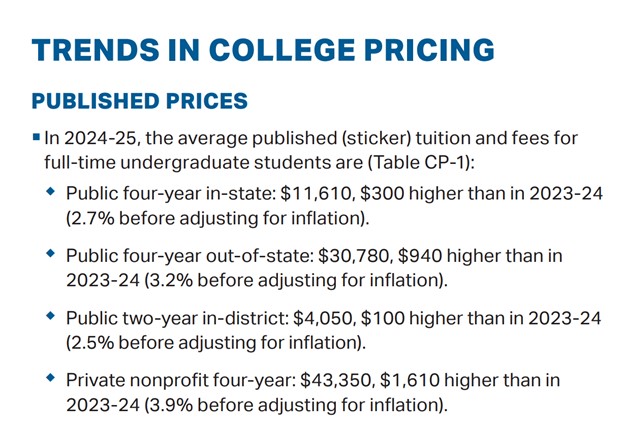
Let’s start with a number that’s scarier than any ghost story. The average annual cost of attendance at a four-year in-state public university exceeds $27,000 per year—and that number more than doubles for private colleges. Multiply that by four years (or more), and you could be staring down a total cost well into six figures. If you wait too long to start saving, you may find yourself facing a financial nightmare.
No Tricks, Just Smart Treats
When it comes to saving for college, not all accounts are created equal. One of the best options available is a 529 college savings plan.
Here’s why 529 plans are a treat, not a trick:
- Tax-Free Growth: Your earnings grow tax-free, and withdrawals are tax-free when used for qualified education expenses.
- Flexibility: Funds can be used for tuition, room and board, books, supplies, and even certain K–12 expenses or student loan repayments. Recently, some credentialing programs were added to the list of eligible 529 expenses.
- Low Maintenance: You can “set it and forget it” with automatic contributions.
- Transferability: If a child decides not to go to college, you have several options. You can roll the funds into a Roth IRA account for the same child or transfer the funds to another family member’s 529 account.
Some states even offer additional tax benefits for contributing to their own state’s 529 plan. Compare plans to find the one that’s right for you.
Avoid the Curse of Student Debt
Without savings, many families turn to loans—and that can lead to decades of horrifying debt. Americans owe over $1.8 trillion in student loans. That’s enough to send chills down anyone’s spine.
By saving early, you can reduce or even eliminate the need for borrowing. Think of your 529 account as a protective charm, guarding your future (and your child’s) from the long-term burden of debt. (C’mon now, don’t roll your eyes. That was a good one…)
The journey is less scary when you bring friends
You don’t have to walk through the graveyard alone. When gift-giving events come around, encourage grandparents, relatives, and even friends to contribute to your child’s 529 account. Most 529 plans make it easy for loved ones to give gifts directly into your account.

When you believe in your children’s future, so do they
The National Association of State Treasurers (NAST) estimates that kids with an education savings account in their name are six to seven times more likely to continue their education beyond high school. The most powerful magic in your financial spellbook is time.
Starting to save when your child is young allows you to harness the power of compound growth—where your money earns interest on its interest. Even small, consistent contributions can grow into a healthy nest egg over 10 to 18 years.
Halloween Wordplay: The Final Chapter
This Halloween, while others are carving pumpkins and trading candy, take a moment to plan for something even sweeter—a financially secure future for your child. They may be years away from tackling their higher education goals today, but time moves fast. Starting now means you’ll be better prepared when that acceptance letter arrives.
So, grab your broomstick, banish the budget boogeyman, and take the first step toward overpowering the cost of higher education. (Don’t stop me, I’m on a roll!) When it comes to college savings, the only thing you should fear is not saving at all.
About the author:
Rodger O’Connor is the Associate Director for Marketing and Communications for Washington Education Savings Plans (WA529), cranking out horrifyingly cringe-worthy content like this article since 2019. WA529 plans include the GET Prepaid Tuition Plan and WA529 Invest. Since 1998, tens of thousands of students have used more than $2 billion of their WA529 savings for higher education in all 50 states and at least 15 countries worldwide.
By Jillian Ziegler, Editor, my529, Utah’s educational savings plan
Over recent decades, there has been no shortage of ink spilled in the debate over the value of higher education. You’ve likely heard the arguments on either side; it’s possible you have a strong opinion yourself. But for today, let’s get back to the basics and explore the underpinnings of why we think college is worth it. Specifically, what does a college education even bring to the table?
As it turns out, a lot.
To start, individuals with degrees are more likely to enjoy greater income and greater economic stability. Across the country, college degrees have been correlated with higher earnings over a career, according to a brief from the University of Utah.
Pew Research reported last year that although workers without a college degree have in fact seen an increase in earnings over recent years, so have those with degrees — meaning the relative benefits are just about as pronounced as in the past.
The financial upside of a degree may have something to do with how rich the college experience can be for making social and professional connections.
College is a unique time in a student’s life, offering rare and precious opportunities to develop relationships, form unique memories, and lay the groundwork for their future career. It’s a context with unparalleled opportunities for internships and research opportunities, and the professional connections found at school can be essential to laying the foundation for a long and happy vocation.
A degree is also connected to having a more stable career in general. Using U.S. Census data, the Public Policy Institute of California found that graduates are more likely to be working or looking for work and are more likely to be employed full-time.
Additionally, these full-time jobs can come with oft-vital benefits like health insurance, vacation, retirement, and more. Through it all, those with college degrees are also more likely to weather recessions a little better, with certain industries usually being hit harder than others.
However, the benefits of a degree don’t stop with your career. While the more straightforward point of a degree is to find placement on a rewarding and well-paid occupational path, it can also go far in holistically improving you in any number of ways.
Reports have shown that degree holders have higher rates of both physical and mental health. According to the U.S. Bureau of Labor Statistics, they’re also more likely to marry and less likely to divorce. Additionally, citizens with more post-high school education are more likely to become involved in their community, both as volunteers and voters.
While these quality-of-life benefits may be more correlation than causation, there’s little doubt that these results are closely connected to things like increased benefits and career stability mentioned earlier.
Of course, this is just a bird’s-eye view of the many factors to consider when weighing a college degree for yourself or a loved one. Luckily, saving for higher education is more of a marathon than a sprint, meaning you’ve got plenty of time to dive into more research on your own.
In the meantime, though, it does seem that the body of evidence supporting the value of a degree is immense. It’s a big decision, and one that can end up affecting nearly every sphere of a person’s life for the better.
Even with all this value, however, the concept of paying for a college degree at modern-day prices can still seem daunting, which is why it’s more useful than ever to get a head start on saving for school as early as possible. Saving can help you or a loved one’s choice to seek a degree more informed by the benefits — and less so the barriers.
About the author:
Jillian Ziegler is an editor at my529, Utah’s educational savings plan. She has a cat named Pippin.
The week of Oct. 20-24 is National Transfer Student Week, focusing on students who start their higher education at a community college, trade or vocational school, who then transfer to a four-year college to complete their bachelor degree. While continuing their education after high school, students can also take core classes at a lower cost and transfer those credits to a four-year college. It’s a smart way to save money on their education and still reach their goal. And a 529 plan can pay for the qualified costs at community colleges, trade schools, as well as colleges.
Community colleges and trade/vocational schools provide their students with a valuable education. Earning a degree or certificate from these institutions of higher education, it’s a great way to launch into a professional career.
If you look at the national average price of a credit hour, community college ones costs $150, while the average cost at a four-year public, in-state university is $406. If your child earns 10 credit hours at a community college on transferable core classes, the cost could be around $1,500. If your child took the same 10 credit hours of core classes at a four-year college or university, the average cost could be $4,060 or more. With this example, by taking the same required courses at a community college, you could still have $2,560 in your 529 account for future use.
Like saving in a 529 plan, the key is starting the transfer planning process as early as possible. If your student plans to start their academic studies at a community college to then complete it at a four-year program, let the community college’s academic advisor know before enrolling there. The counselor can guide your student to the four-year programs with which they have transfer agreements, and which courses are guaranteed to transfer and be applied to their bachelor’s degree. After your student has taken the core requirement classes and is ready to start the transfer process to the four-year program, they need to connect with their next school’s transfer office for guidance.
Another avenue for students to gain transfer credits is Prior Learning Assessments (PLA). Students can earn college credits by exam, like tests created by theCollege Level Examination Process or CLEP, and through a portfolio that contains a student’s applicable education learning.
Taking core requirement courses at a lower-priced community college is a smart way to keep money in your 529 account future use at a four-year school. Do your research, use the school’s resources and staff, and you can make the transfer process work well for you and your 529 savings.
If you’d like to learn more about saving for your child’s college or career training with a 529 plan, visit CSPN at collegesavings.org or search for your home state’s 529 program.
About the author:
Trisha Good is the executive director of Ohio Tuition Trust Authority. Since 1989, Ohio Tuition Trust Authority has sponsored and administered Ohio 529 CollegeAdvantage. Ohio’s 529 Plan oversees more than 682,000 accounts and over $19.5 billion in assets as of June 30, 2025. Visit CollegeAdvantage.com or call 1-800-AFFORD-IT (233-6734) for more information.
Luke Minor, Senior Director of Postsecondary Affordability, Washington Student Achievement Council
October 7, 2025
If there’s anything that drives me crazy, it’s earworms! You know – those insidious and hopelessly catchy pop songs pumped out of department store overhead speakers with reckless abandon? We’ve all fallen victim to them, and they typically have a knack for making us want to crawl out of our skin.
But every once in a while, one of these sneaky little buggers has a way of worming its way down into my heart to offer a serene moment where everything feels right in the world. A prime example is Semisonic’s classic alt-rock ballad, Closing Time. I’ve had that darn song stuck in my head for days on end, more times than I can count. Yet every time it comes on, I just can’t help but crank it up, bellow along, and enjoy a moment of glee.
It was fitting that Closing Time was released in 1998 – a year defined by the song’s closing line: “Every new beginning comes from some other beginning’s end.” In 1998, we experienced momentous “beginnings of ends” such as the Seattle Mariners’ last full season in the storied Kingdome and the sobering realization that it was the last year, we could party like it’s 1999 without it being weird and passé. It was also a time of “new beginnings,” such as the launch of a small and inconsequential tech company I’m sure you’ve never heard of…rhymes with “bugle…” But most importantly, to us 529ers here in Washington, 1998 saw the birth of Washington’s first 529 plan – the GET Prepaid Tuition Plan!
While I’ve always liked Closing Time, it was not until recently that I realized that it is, perhaps counterintuitively, an ideal theme song for raising kids and saving for college. Stick with me here. At face value, the song is basically about kicking people out of a bar at, well …closing time. Upon deeper reflection and consultation of the all-knowing Wikipedia, it turns out there’s more going on than meets the eye (err, ear?). For starters, it turns out that the song doubles as a metaphor for a baby being born into the world, as the songwriter was expecting a child while writing the lyrics.
And importantly, throughout the song, we are reminded that coming to an end – whether with something relatively inconsequential and seasonal like the end of summer, or a once-in-a-lifetime moment like high school graduation – doesn’t have to be a time of sadness. Any end is also an opportunity to prepare for a new world of possibilities.
Such is the goal of saving for college and raising a child. We all know time moves in the blink of an eye and only seems to accelerate as the years go by. Along the way, there are unforgettable moments of wonder and triumph as we churn through countless milestones marked simultaneously by tearful goodbyes and inspiring hellos. In the face of it all, it’s important that we take time to pause and reflect, not only to enjoy fleeting moments, but to set goals and take action with intentionality and optimism. [Insert shameless plug to remind you that a fantastic outlet for this intentionality and optimism is to start a 529 account for a child while they’re young and continue making regular contributions over time. It’s never too early to start saving!]
And with that, let’s close out with heeding Semisonic’s semi-philosophic advice that reminds us to plan ahead and support our students in all of their new beginnings to come: ♪♪ “Open all the doors and let you out into the world!” ♪♪
_____________
About the Author
Luke Minor is the Senior Director of Postsecondary Affordability at the Washington Student Achievement Council. In his role, he oversees Washington State’s Education Savings Plans (WA529), which include the GET Prepaid Tuition Plan and WA529 Invest. Since 1998, tens of thousands of students have used more than $2 billion of their WA529 savings to attend colleges in all 50 states and at least 15 foreign countries. In his free time, Luke enjoys getting outside to hike and ride bikes with his wife and rambunctious kindergartner; being terrorized by his new half-border collie, half-velociraptor puppy; and of course, rocking ankle socks while jamming out to all of those late 90s and early 2000s alt-rock classics, in true millennial fashion.
This Fortune magazine headline caught my eye: “Meet a 23-year-old electrician who was a ‘good student’ but skipped college to join Gen Z’s blue-collar revolution. He makes 6 figures.” He may have ‘skipped’ college, but he didn’t skip the training. He earned his training as an apprentice and then became a certified electrician.
The ‘blue-collar’ trend toward workforce training after high school illustrates the many paths to careers in addition to what we traditionally think of as college, including apprenticeships, trade school, vocational training, and professional credentialling. Career training programs can have minimal, and relatively accessible costs. As you think about how to save for the possibility of career and technical education, consider the following:
Make a Plan. Setting an education savings goal can help you stay on target and on track. To make a plan, start with an online savings calculator. Many 529 plans have state-specific calculators that give you an estimate of what future education expenses will be as you set your desired savings goal.
Save Systematically. Whether you set up recurring contributions from a bank or payroll direct deposit, saving systematically is an automated way to build your savings quickly. Consider directly depositing $150 per pay period into your 529 account. After 26 pay periods in a calendar year, you would have nearly $4,000 in contributions to your 529 account.
Adjust as Needed. At least once a year, take a moment to review your contributions, your investment growth, and the needs of your family, and adjust your automatic contributions. Increasing automatically is an option for many 529 plans, but it’s never a bad idea to take the opportunity on 529 Day or during college savings month to boost your contributions. It’s often said that when your child reaches their next milestone (out of diapers, out of daycare, etc.), it’s a good time to increase the contribution amount. Whatever works best for your family, be sure to assess and adjust.
Why this Matters: Making a plan and sticking to it can accelerate your education savings and relieve the financial burden of costs associated with your chosen path when the time comes, especially when you are saving for more than one beneficiary.
About the author: Lael M. Oldmixon, M.Ed. is the Executive Director of the Education Trust of Alaska, which offers Alaska’s three 529 plans, Alaska 529, the T. Rowe Price College Savings Plan, and the John Hancock Freedom 529. She lives in Alaska with her spouse, two children, and two dogs.
September is College Savings Month. May 29 is 529 Day.
It’s not an oversight that Congress, which LOVES commemorative days, has not heralded College Borrowing Month or Student Loan Day. This simple example of two students shows why saving for college is always better than borrowing:
● Amy: Beneficiary of college savings and no student loans. Over 18 years, Amy’s family was able to save $100 per month ($21,600 in total contributions) and had an average return of 6% giving her approximately $38,800 to pay her college bills.
● John: No savings, in need of student loans. With no college savings, John had to borrow approximately $38,800 (at 6% interest rate) to pay his college bills. He started paying $430 monthly for 10 years after graduation and will make approximately $51,700 in total principal and interest payments.
● The result: John paid $51,700 more for his degree than Amy. He also used $430 each month for 10 years to make a loan payment rather than investing in a home, retirement, and/or his children’s education.
● The benefit of savings: Families who can save a smaller amount ($100) each month over a longer period (18 years) enable their students to avoid borrowing a larger amount ($38,800) that needs to be paid over a shorter period (10 years).
The numbers and calculations are less important than the point: saving for college will reduce the total cost of education, better position graduates for future financial success, and maybe even help jump-start their retirement accounts.
How to save
Assuming agreement that “Saving a Dollar Today is Better than Borrowing One Tomorrow”®, the question turns to how best to save for college. Since the first programs were launched 29 years ago, 529 Savings and Prepaid Plans have become the go-to vehicles for college savings, and they continue to grow. 529 data guru Paul Curley at ISS Market Research tells us that on June 30, 2025, 17.3 million 529 accounts were valued at $568 billion, up from 16.8 million accounts with $508 billion in assets under management just one year earlier. An excellent reason to celebrate 529 Day each year!
Before we look at 529 programs, it is worth noting that Coverdell Education Savings Accounts may also be a viable alternative for some families saving for college. Both enjoy tax advantages. Coverdell Accounts have not been widely used because they have income restrictions on who can open them, a relatively low maximum annual contribution of $2,000 per beneficiary, and a requirement to use the savings before the beneficiary reaches age 30.
529 accounts have been structured to provide many incentives for families:
1. No income restrictions: Anyone, no matter their income, may own and contribute to a 529.
2. Significant tax benefits: Unlike brokerage or other taxable accounts, neither the interest and gains on the 529 investments nor the withdrawals for Qualified Education Expenses (QEEs) are taxed. QEEs include just about all college expenses, such as tuition, housing, food, books, supplies, computers, etc. In addition to federal tax advantages, many states also offer state tax credits or deductions.
3. Not state specific. Savers may pick any of the more than one hundred 529 Savings Plans for use at schools in any state. Check 529 Prepaid Plans for restrictions, if any, on where those investments may be used and for options if the student decides not to attend a school for which a prepaid investment has been made. Find and compare 529 programs here.
4. Many uses for 529s. In addition to using 529s for college expenses, approved apprenticeship and certificate programs, savers may withdraw up to $10,000 for K-12 tuition and expenses, and/or payments on student loans.
5. Options for leftover savings. If a student does not go to college or money remains after graduation, the account owner has options:
a. Don’t do anything. There is no requirement to close an account after a student completes school.
b. Allow the beneficiary to roll remaining savings into a Roth IRA. Subject to certain restrictions, beneficiaries may roll up to $35,000 into a Roth IRA.
c. Name a new beneficiary. Account owners may easily change beneficiaries, even to themselves.
d. Make a non-qualified withdrawal. The Account Owner may make a withdrawal for non-qualified expenses, incurring a 10% penalty and paying taxes on the earnings.
6. Financial aid friendly: 529 savings have a minimal impact on financial aid eligibility. Money saved in a 529 Plan reduces financial aid eligibility by 5.64% of the amount saved. For example, $10,000 saved in a 529 could reduce financial aid eligibility by $564.
7. Beneficial for estate planning: Account owners, typically parents and grandparents, prefer 529s because they maintain control over how monies are invested but do not include the 529 accounts in their taxable estates.
Saving for college is an important way to minimize college debt, reduce the overall cost of obtaining a degree, and allow recent graduates to save for their future rather than pay for their past.
® – Invite Education LLC
About the author:
John Hupalo is the Founder & CEO of Invite Education
By Cheryl Rapp, State of Wisconsin College Investment Program Finance Officer, Edvest 529
September 16, 2025
Each September brings a reminder to look ahead and plan for education because it’s College Savings Month. With the cost of higher education continuing to rise, having a clear savings plan in place is more important than ever. One of the most effective tools to help you prepare is a 529 college savings plan.
Understanding a 529 Plan
A 529 plan is a tax-advantaged account designed to help individuals save for education costs. Whether you’re saving for a child, a grandchild, or yourself, a 529 plan offers several advantages:
- Tax-Free Growth: Earnings are not subject to federal income tax when used for qualified education expenses.
- State Tax Benefits: Many states offer additional tax deductions or credits for residents who contribute to their state’s 529 plan.
- Flexibility: Funds can be used at most colleges, universities, vocational schools, specific K–12 tuition and related costs, and registered apprenticeship programs. They can also be used for up to $10,000 (lifetime) toward student loan repayment.
- Low Costs and Choice: 529 plans typically offer a range of investment options, often with lower fees than other savings choices.
Think of College Savings Month as your yearly nudge to take action. The sooner you start saving, the more time your contributions have to potentially grow through the power of compounding, and the less you or your student may need to borrow later.
This is also the perfect time to check in on your savings habits:
- Are you contributing regularly?
- Could you increase your monthly amount by even $10 or $25?
- Have you automated your contributions so that saving happens effortlessly?
Tips to Make the Most of College Savings Month:
- Open or review your 529 account – Now is a great time to start if you don’t have one. If you do, consider checking in on your investment strategy and goals.
- Set up automatic contributions – Regular contributions, even as little as $10 or $25 a month, can build momentum.
- Involve family and friends – Let loved ones know they can contribute to your child’s 529 account for birthdays or holidays.
- Explore your state’s plan benefits – Some plans offer promotions or incentives during College Savings Month.
College Savings Month is more than a reminder for future planning; it’s an opportunity to take real steps toward funding educational goals. Whether you’re opening your first account or adding to an existing one, a 529 plan can help you maximize your savings through tax advantages, low costs, and flexible use options. Your future self or your future graduate will thank you.
About the Author
Cheryl Rapp is the College Investment Program Finance Officer at the Wisconsin Department of Financial Institutions, which oversees Edvest, Wisconsin’s 529 Plan. Edvest has been helping families save for education since 1997. Rapp has over 25 years of experience working for the State as the College Affordability Specialist prior to joining the College Savings Program. Her experience includes educating students, parents, teachers, and school counselors on the value of and how to complete the Free Application for Financial Student Aid. In her current role as College Investment Finance Officer for the Wisconsin 529 College Savings Program, Rapp manages outreach to Wisconsin residents. She works to increase awareness of the plans among Wisconsin residents while helping them begin saving for their children’s higher education. She is a graduate of the University of Wisconsin-Green Bay, from which she earned a bachelor’s degree in Humanistic Studies.
As soon as Baby G was born, my husband and I decided that we needed to be the most prepared grandparents in the history of grandparents. Nana and Pops would win the game of responsible grandparenting and set our little peanut up for future success.
This responsibility worked itself out in a few very specific ways for us. We:
- Own the same stroller and car seat as G’s parents so that transport is never an issue;
- Stock diapers, wipes, and clothes so no “packing of the bag” is required to visit; and
- Opened our own 529 plan as soon as her parents had her Social Security number.
Now that G is the big 3, I can report that numbers 1 & 2 kept things easier for our family and removed stress from exhausted new-parent and eager-grandparent brains. Never having to worry about grabbing the car seat base or forgetting pj’s make hosting our now Big Girl a simple and smooth process.

Simple and smooth is also how I would describe opening our own 529 plan with our granddaughter as the beneficiary. We knew we wanted to select the investments and retain control of the funds, so we opened our own account very early. This has worked great for us, allowing a long-time horizon for her investments to grow. We anticipate a solid financial start, early conversations about education and career choices, and the satisfaction that she’ll have less student loan debt.
Most importantly, we’re modeling investing behavior across generations. While the trips to Disney are fun, we know that planning for her future with a 529 account is truly the ultimate grandparent flex.
About the Author:
Marissa Rowe is executive director of the Indiana Education Savings Authority, which administers the Indiana529 savings program with more than $8.4 billion in assets under management in three plans. A proud first-generation college student, Marissa received her B.A. in Mass Communication from the University of North Carolina at Asheville and her M.A. in Philanthropic Studies from the Indiana University Lilly Family School of Philanthropy. She paid off her student loans in 2020 and has 529 plans for her nieces and granddaughter.
Devon Copeland, Senior Communications Associate, Invest529
September 3, 2025 (reprinted from September 3, 2024)
Do you ever find yourself having a chat… with yourself? Well, I do! Especially when it comes to big life decisions—like saving for college. A couple of years ago, I had one of these “talks,” and you know what? It actually helped! So, I thought I’d share that inner dialogue in case you’re also wondering, “Is saving for education really that easy?” Spoiler alert: Yes, it is. And with College Savings Month here, there’s no better time to start!
Me #1: Okay, self, we need to talk about saving for the kids’ education. We’ve been putting it off for a while now.
Me #2: Ugh, I know… But doesn’t it sound a bit… complicated? And expensive?
Me #1: That’s precisely why we need to get a handle on it now. And guess what—I’ve done some research. Turns out, a 529 account could make it a lot simpler.
Me #2: Oh, I’ve heard of those! But what makes a 529 account so special?
Me #1: Well, for one, it’s super flexible. You can use it for a wide range of educational expenses—like tuition, books, room and board, and even some K-12 expenses. Plus, it’s not just for traditional four-year colleges. Trade schools, apprenticeships, and even online courses are covered!
Me #2: Hold on. So, I can save now, and the kids can decide later whether they want to be doctors or auto technicians?
Me #1: Exactly. And here’s another cool thing: the money grows tax-free. So, every dollar we put in has a chance to grow more quickly over time without Uncle Sam taking a cut. When it’s time to use the money, we won’t pay taxes on the withdrawals if they’re for qualified expenses.
Me #2: I do like the sound of that! But how much do we need to start?
Me #1: That’s another great thing. You don’t need a ton of money to get started. Most 529 accounts let you open one with a small initial deposit, and then you can contribute as little or as much as you want, whenever you want. It’s totally up to us.
Me #2: Wait, so I could start with, like, $25?
Me #1: Absolutely, or even less! And we can set up automatic contributions to keep it going without even thinking about it. It’s like a “set it and forget it” situation, which is perfect because… well, let’s be honest, we always have a lot going on.
Me #2: That sounds manageable. But what if we don’t end up needing all the money?
Me #1: Great question. We can always change the beneficiary to another child or even to ourselves. Maybe I’ll finally take that pastry course in Paris!
Me #2: Ooh la la, now you’re talking!
Me #1: See? It’s really a win-win. Saving for education doesn’t have to be hard or scary. It’s all about getting started and doing what works best for our family.
Me #2: Okay, I’m convinced. This actually sounds easier than I thought. Let’s do it!
There you have it—my inner dialogue that led to some real savings! If you’ve been on the fence, maybe it’s time for you to have a little chat with yourself, too. Because with a 529 account, saving for education can be simple and rewarding. This College Savings Month, take the plunge. Your future self—and your kids—will thank you for it!
About the Author
Devon Copeland is the senior communications associate with Commonwealth Savers (formerly Virginia 529). Commonwealth Savers makes education more accessible and affordable for families and individuals. For more information on Commonwealth Savers education savings options, visit Commonwealth Savers.com or call 1-855-4SaveVA (1-855-472-8382) to obtain program materials.