



By Trisha Good, Executive Director, Ohio Tuition Trust Authority
May 29, 2024
I am a firm believer in the power of saving in a 529 plan as my family has personally experienced its benefits. My husband and I saved in 529 plans for our two children’s education and career training after high school. With the help of our extended family, they both graduated from their respective colleges DEBT FREE! And now, I am saving for my two wonderful grandchildren for their future education.
As we celebrate May 29 as 529 Day, I want to share the many reasons why my husband and I chose to save in a 529 account.
529 tax benefits
All earnings in a 529 plan are tax-free, so all investment growth is yours to use for higher education expenses. Compound interest—the interest earned on contributions, earnings, and interest already accumulated in the 529 account—is included in your 529’s tax-free earnings.
529 plan withdrawals for qualified higher education expenses are also tax-free at schools that accept federal financial aid. These costs include tuition; room and board when the beneficiary is enrolled at least half-time; mandatory fees; computer equipment and related technology as well as internet services; books, supplies and equipment related to enrollment and classes; and certain expenses for a special-needs student. Room and board costs can also include rent for off-campus residencies—apartments, rental homes, and Greek fraternities and sororities’ houses—and groceries (non-taxable items only), provided these costs are equal or less than the school’s room and board allowances. 529 plans can also pay for fees, textbooks, supplies, and equipment, including required trade tools for registered apprenticeships.
Many states also offer tax deductions or tax contributions for contributions made to the state’s 529 programs. If you want to see your home state’s benefits and tax information, CSPN has a great tool to review your state’s program and compare it to others.
Use at many kinds of schools!
529 plans can be used for your child’s education and career training after high school – whether for a two-year, four-year, graduate degree, certificate programs, registered apprenticeships programs, or any other post-secondary credential. This list includes community colleges and technical schools, vocational or trade schools, graduate schools, and even some study-abroad programs. If the school has a Federal School Code with the Federal Student Aid, an office of the U.S. Department of Education, then you can pay for qualified costs there with a tax-free 529 withdrawal.
Others can help save
As the adage says, “It takes a village to raise a child.” When loved ones asked us for gift ideas for our children, we asked for contributions to their 529 accounts for their future. Most contributions to a 529 plan can start as low as $10-$25. Also, many 529 programs offer gifting platforms that allow trusted
family members and friends to make online gift contributions directly to your children’s 529 accounts without needing the actual account number.
529 flexibility
Not only can you use your 529 account for post-secondary education expenses, but you can also use it for K-12 tuition at a public, private, or parochial elementary or secondary school. This means your education saving account can cover many costs for elementary, secondary, and post-secondary education. The 529 withdrawal limit is $10,000 per year to pay for K-12 tuition. Consult your qualified tax advisor for specific information.
Families can also pay for a student loan that qualifies for the federal student loan income tax deduction with a 529 distribution. There is a $10,000 lifetime limit for the beneficiary of a 529 account. Another $10,000 can repay the qualified student loans of the beneficiary’s siblings.
At the start of 2024, a new tax-free qualified distribution was added to 529 accounts. Now, any remaining funds in a 529 account can be rolled over into a Roth IRA for the same beneficiary as the 529. There are prerequisites that must be met to use this new qualified distribution. Consult your qualified tax advisor for specific information.
There’s a lot to celebrate about 529 plans on 529 Day. After all, any investment in a 529 plan is an investment in your child’s future. To learn more about 529 higher education saving plans, please visit CSPN.
About the author:

Trisha Good is the executive director of Ohio Tuition Trust Authority. Since 1989, Ohio Tuition Trust Authority has sponsored and administered Ohio’s 529 College Savings Program, CollegeAdvantage. Ohio’s 529 Plan oversees nearly 675,000 accounts and over $17.22 billion in assets as of March 31, 2024. Visit CollegeAdvantage.com or call 1-800-AFFORD-IT (233-6734) for more information.
By Alyson Luszcz and John Mitchell, Co-Chairs, CSPN Data, Operations, and Technology Committee
Every year, a big group from our workplace (or office) gathers for a summertime outing at a Chicago White Sox baseball game. Some of the colleagues who join are baseball fanatics and others could not name one player on the team. Invariably, at least someone is attending the first baseball game in their life. As we talk over beer and peanuts, some colleagues admit to feeling sheepish about how little they know about baseball. As devoted baseball fans, we always tell them there’s nothing to be shy about and remind them that even the most passionate fan has many things left to learn about the game.
As it turns out, we see similar a similar phenomenon among those saving – and not saving – in 529 plans.
Across the broad American population, approximately 10% of households are estimated to be saving in a 529 plan.[1] Interestingly, an additional 23% of the population is estimated to be saving for college in other vehicles such as checking accounts and other tax-preferred accounts.
Why are so many families saving for college in something other than a 529 plan? In a 2022 survey commissioned by the College Savings Plan Network (CSPN), the most common reason families reported saving for college in anything other than a 529 was “unfamiliarity” with 529 plans. Given that nearly 1 in 4 families are saving for college but not in a 529, states and plan administrators have a lot of work to do to help more families understand all the benefits that 529 plans can offer, including tax-preferred growth, state-level tax advantages, professional designed investment options, and much more.
However, just as the most devoted baseball fan has many things left to learn about the game, the same CSPN survey found that approximately 60% of those currently saving in a 529 plan did not know at least one of the following advantages of 529 plans:
- Funds saved in a 529 can be used across all states in the US, not just at institutions in a 529 plan’s host state.
- 529 plans can be used for traditional 4-year colleges as well as 2-year colleges, graduate school, vocational school, technical school, and apprenticeships.
- Money saved in a 529 plan is not forfeited if not used to pay for education.
- 529 plans have a small impact on financial aid.
- Anyone can open a 529 plan – including parents, aunts, uncles, grandparents, friends, and other loved ones.
Clearly, 529 plans have additional work to do to help their current account holders fully understand the flexibility and benefits associated with 529 plans. The good news is that the survey found that 75% of account holders wanted their plan administrator to provide more information on the cost of college and effective strategies for maximizing savings.
As a state administrator and private-sector plan manager of 529 plans, we look forward to doing all we can to educate families – from those saving in a 529 plan today to those who have yet to hear about 529 plans – on the full range of advantages that 529 plans can offer.
Alyson Luszcz has over 20 years in the 529 industry and is currently AVP, Advisor-Sold Plan Program Manager at T. Rowe Price. She serves as Co-Chair of the CSPN Data, Operations, and Technology Committee and is based in Owings Mills, MD.
John Mitchell is Director of College Savings at the Illinois State Treasurer’s Office, where he oversees Illinois’ two 529 college savings plans: Bright Start Direct-Sold and Bright Directions Advisor-Guided. He serves as Co-Chair of the CSPN Data, Operations, and Technology Committee and is based in Chicago, IL.
[1] All statistics referenced in this blog post are taken from the CSPN National Survey of College Savers, released in May 2023 by the College Savings Plan Network. The survey was a nationally representative sample of more than 35,000 respondents. A public version of the report is forthcoming.
By Eva Giles, College Savings Program Manager, Finance Authority of Maine
May 14, 2024
Graduation season is a time for celebrating the accomplishments of the students in our lives. What do you gift a graduate to acknowledge these accomplishments and inspire them in the next steps of their journey? To give a gift with a lasting impact, look towards KSAs—knowledge, skills, and abilities.
Knowledge
Graduates will be entering a brand-new world. Whether it is moving to a college campus to begin a 4-year program, starting a part-time course load while balancing work and school, or embarking on a certificate or apprenticeship program focused on developing technical skills, your graduate needs to understand the process, their role, and their responsibilities in this new setting. Do they need to visit the Financial Aid Office, complete student loan counseling materials, or seek out a work-study job? With your help, your student will know the actions they need to complete, important deadlines, and who to contact. Your gift of knowledge while building their own expertise will reduce anxiety and make their tasks manageable.
Skills
Everyone needs help with skills for “adulting.” Introductions and handshakes are important aspects of first impressions that many students don’t practice, and they could use your guidance to perfect them. The ability to create a monthly budget and strategies to commit to the plan is another helpful skill for your graduate to develop as they enter adulthood. Your gift of skill sharing can set the stage for their success.
Abilities
Students need to develop the ability to communicate effectively and to advocate for themselves. Is your student able to talk and write about their strengths and interests? Can they effectively complete a scholarship application? Can they express why an employer may want to hire them for a summer job? Can they navigate a new school infrastructure to get their questions answered? Your help can make a tremendous difference. Edit a scholarship essay or a resume. Provide feedback during a practice interview. Review the college website. Help them become familiar with resources that are available on-campus as well as in the community. Your gifts of wisdom and experience can be just the support they need.
Everyone wants to feel like they have what it takes to succeed. When starting a new challenge, it is helpful for your student to have you reinforce that belief in them. Words of encouragement, recognition of prior achievements, and tangible rewards, such as a contribution to a 529 account, are gifts that demonstrate confidence in your student and encourage confidence in themselves. Sharing your knowledge, skills, and abilities toward building a prepared and resilient individual is one of the best ways to convey – Way to Go, Future Graduate- You got this!
For resources and tools that may help your future graduate, please visit FAMEMaine.com.
About the author:
Eva Giles is the College Savings Program Manager for the Finance Authority of Maine, administrator of NextGen 529®. NextGen 529 is Maine’s section 529 plan which many families use to save for higher education. Outside of work, Eva and her family spend time hiking and enjoying the natural beauty Maine has to offer.
By Devon Copeland, Senior Communications Associate, Virginia529
May 7, 2024
As we enter May, it’s not just any ordinary month – it’s a time dedicated to celebrating mothers and all they do for their families. Mother’s Day is May 12th, offering the perfect opportunity to reflect on mothers’ incredible role in our lives. And what better way to honor the spirit of motherhood than by empowering parents to secure their children’s educational future? This month, let’s harness the power of MOTHER –with six steps to boost your child’s education savings through a 529 account!

Maximize Contributions: Families who have delayed saving typically put it off because they either don’t believe they have the money to start, or they can’t decide on the best way to save. But every little bit counts when it comes to saving for your loved one’s education. Automating your contributions can make saving for future education costs easier, whether setting up withdrawals from your paycheck or simply linking your bank account. Having a steady stream of automatic contributions, even of just $20 or $50, can be powerful.
Optimize Investments: Investing can feel intimidating, but it doesn’t have to be. Take the time to explore your investment options within your 529 account and choose investments that align with your goals and risk tolerance. Consider seeking advice from a financial advisor to help you make informed decisions. Some plans, like Virginia529, offer tools to help you familiarize yourself with available investment options.
Tell Others: Building your child’s education fund can be a community effort. Consider spreading the word about your 529 account and inviting your family and friends to join the savings journey. By sharing your 529 plan with others, you not only open the door for additional contributions but also foster a sense of support and collaboration in securing your child’s future education.
Harness Tax Benefits: One of the biggest perks of a 529 account is its tax advantages. In addition to funds in 529 accounts growing free from state and federal taxes, some states offer additional tax benefits to contributing. For example, Virginia residents may deduct contributions to 529 accounts – up to $4,000 per account per year from their Virginia state individual income taxes.
Explore Options: Different states offer their own 529 plans, each with its own unique features and benefits. Take the time to research and compare plans from different states to find the one that best suits your needs. You may even consider opening multiple 529 accounts to take advantage of different benefits.
Review Regularly: Life is unpredictable, and your savings strategy should be flexible enough to adapt to whatever comes your way. Make it a habit to review your 529 account regularly to ensure it’s still aligned with your goals and circumstances. Adjust your contributions and investment allocations as needed to stay on track and keep your savings growing.
With these MOTHER-inspired tips in your back pocket, you’ll be well-equipped to confidently tackle the challenge of saving for your child’s education. A 529 account offers a powerful tool to help you achieve your savings goals while enjoying valuable tax benefits along the way. Start planning today to give your child the gift of a bright and promising future.
About the Author
Devon Copeland is the senior communications associate at Virginia529. Virginia529 makes education more accessible and affordable for families and individuals. With more than $102.8 billion in assets under management and 3.1 million accounts as of March 31, 2024. Virginia529 is the largest 529 plan in the nation. For more information on Virginia529’s college savings options, visit Virginia529.com or call 1-888-567-0540 to obtain program materials.
Marilyn Whitney, Executive Director, IDeal – Idaho College Savings Program
May 1, 2024
During the week of May 6, the National PTA celebrates Teacher Appreciation Week. This year, the theme is “Teachers are Shining Stars!” This is an opportunity to show your appreciation for the vital role teachers play in the lives of our students. Whether it is at the pre-school, K through 12, or post-secondary level, teachers deserve our recognition and thanks.

I was fortunate to have many amazing teachers all through my educational experience. From my first-grade teacher, Mrs. Herzinger, to my high school mentor, Mrs. Franden, and my college advisor, Dr. Clark, I was encouraged, supported, and motived, especially when I faced challenges and setbacks.
These teachers were also instrumental in helping me on the pathway to college and through both my undergraduate and graduate programs. Many people credit a special teacher with influencing their decision to continue education after high school and pursue a given career. I had two high school teachers who not only took the time to talk to me about what I would study in college, they also helped me secure scholarships and student loans. I only wish my parents could have taken advantage of the tax benefits of saving for my college education a 529 account, which would have also minimized my student loan debt.
My high school teachers also influenced my decision to study education. While I taught for only a few years, I remember how demanding the job can be – from preparing lessons, to parent-teacher conferences, and the never-ending task of grading papers. But I also remember the sense of satisfaction I felt when my students succeeded.
While I did not stay in the classroom, my career has always included a link to the education world, and I have continued to encourage parents and students to plan for their education goals, especially how to save to make sure they have the financial resources to achieve those goals. In my current role, I have the opportunity to educate families about saving with IDeal by sharing my experience of saving for my daughter’s college education through the program. And I am now saving with IDeal for my grandchildren’s education.
I absolutely believe that teaching is a noble career. In fact, my daughter has been a kindergarten teacher for the past five years. Her first year was interrupted by the COVID pandemic, and I will never forget how heartbroken she was not to be able to finish the year with her kids. Thankfully, we all got through that difficult period, and I have a new appreciation of how important teachers are in our lives.
The National PTA has a “Thank a Teacher Toolkit” with some great ideas for showing appreciation to a special teacher:
- Reach out and say “Thank You” to a teacher who made a difference in your life.
- Give a teacher a gift card to a favorite store or restaurant.
- Volunteer in a classroom.
- Donate school supplies to a teacher.
This year as we celebrate Teacher Appreciation Week, take an opportunity to do something special for a teacher! I know from experience how meaningful it is to get a thank you note or to see or hear from a student years after they have left your classroom and learn what they have accomplished. Thank you to all the teachers out there! You truly are “Shining Stars”!
About the author:
Marilyn Whitney is the Executive Director of IDeal – Idaho College Savings Program. As of March 31, 2024, IDeal has 51,307 accounts with total assets of $821,745,426. Our client services number is 1-866-433-2533 and our local Idaho number is 1-208-332-2935.
Last month, Washington, D.C. welcomed members of the National Association of State Treasurers (NAST) for their annual Legislative Conference. This gathering not only facilitated numerous networking opportunities but also featured engaging discussions with congressional leaders and subject matter experts. Attendees delved into current congressional priorities, honed their messaging and strategies, and explored the impactful role of advocacy led by Treasurers and their teams.
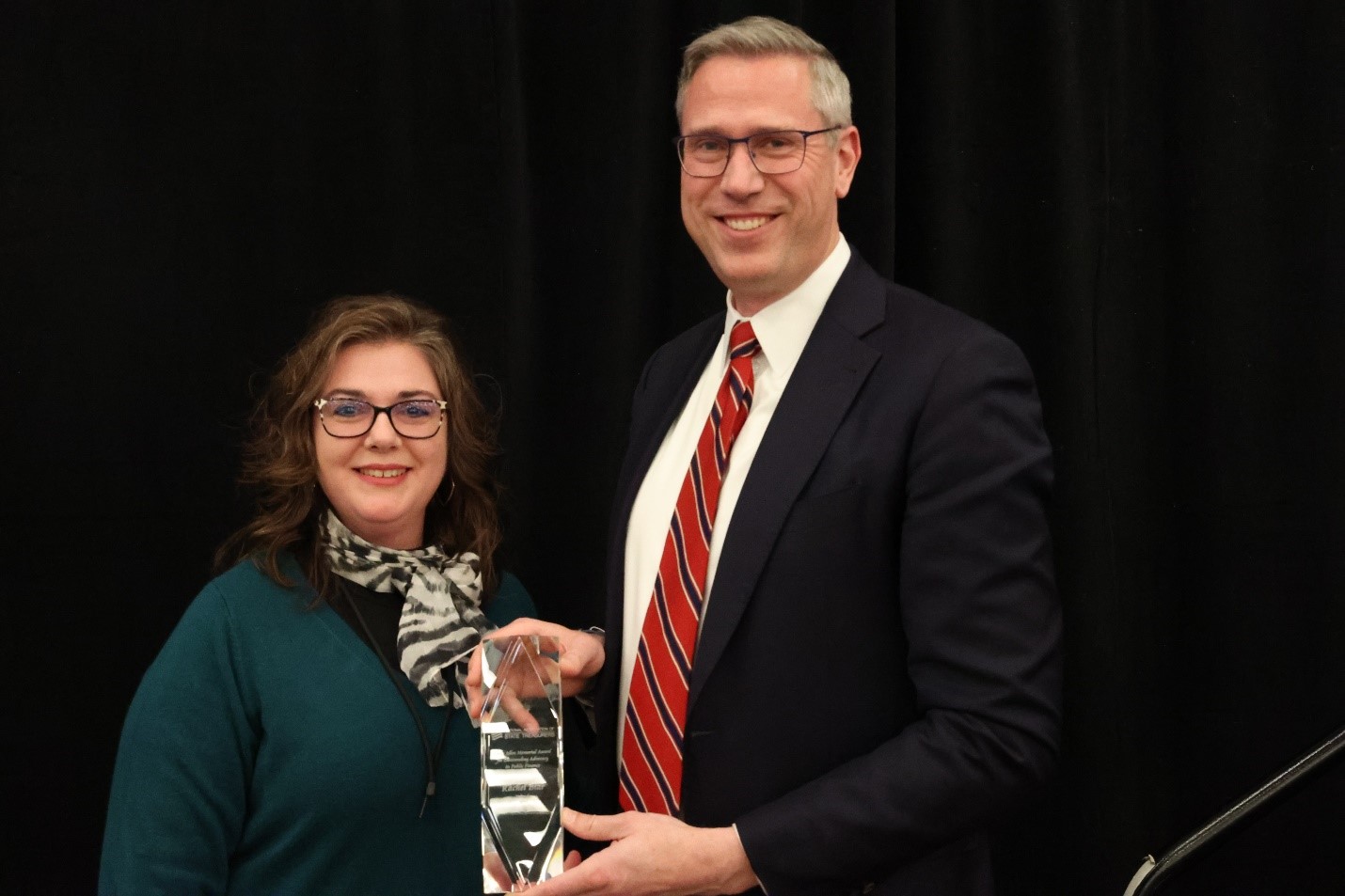
One of the highlights of this year’s conference was the presentation of the Chris Allen Memorial Award for Outstanding Advocacy in Public Finance to Rachel Biar, Assistant State Treasurer of Nebraska. This prestigious award is given to an individual from a state treasury, NAST member agency, or congressional staff who has demonstrated exceptional advocacy or advancement of NAST’s priorities over the past year.
Rachel, who recently served as Chair of the College Savings Plans Network (CSPN), has been instrumental in key advocacy efforts. These include advocating for CSPN during discussions on the 529-Roth IRA rollover provision, securing CSPN influence on child savings account proposals at the federal level, and supporting legislation that expands the use of 529 plans for workforce credentialing. Rachel’s dedication significantly contributed to NAST’s achievements in 2023.
Before the conference attendees dispersed to engage with Congress members individually, the conference concluded on a high note in a Capitol Hill hearing room, where Representatives Ron Estes (R-KS), Seth Magaziner (D-RI), and Rob Wittman (R-VA) shared insights into their legislative agendas. These discussions underscored broad support for ABLE savings plans and the expansion of 529 accounts for educational purposes. Representative Wittman, in particular, highlighted his personal connection to the issue through experiences with his son’s education, driving his advocacy for legislation that allows 529 funds to be used for credentialing programs.
In addition to focusing on college savings plans, the conference explored the evolving landscape of work and what the future may hold. Discussions also covered the implications of recent legislative developments like the Savers Match under Secure 2.0, particularly how these changes affect state-facilitated retirement programs given that Roth IRAs do not qualify for the new federal matching funds intended to support low-income workers in saving for retirement.
Overall, the NAST Legislative Conference was a resounding success, marked by insightful discussions, valuable learning opportunities, and robust advocacy efforts—all wrapped up in an engaging and enjoyable setting.
About the author:
Dillon Gibbons is the Director of Policy at the National Association of State Treasurers (NAST).
When it comes to saving for higher education, the thought can be daunting. But saving for multiple students at once – how can families make this work? If you opt to save for a loved one’s future education with a 529 college savings plan, you might find the flexibility and tax advantages, like a potential state tax deduction or credit, make saving for multiple students a bit more appealing than intimidating.

Here are a few things to consider if you are currently saving for multiple beneficiaries’ higher education or think you might do so in the future.
Start as early as possible: One sentiment I often hear from parents saving with a 529 plan is, “I wish we would have started sooner!” While that might seem easier said than done, keep in mind that time is your biggest asset when it comes to saving for major milestones like sending a child off to college with less of a need for student loans. When saving with a 529 plan for college and career training, the tax-deferred growth and compound earnings you might experience on your 529 investments can really add up over time. This means even modest contributions over the course of a child’s life can have a meaningful impact. When saving for multiple loved ones at the same time, modest, steady contributions to a 529 plan via payroll direct deposit or ACH can be more easily worked into a household spending plan.
Know that you don’t have to save it all: No really, you don’t! Saving with a 529 plan is just one tool in your toolbox you can use toward the cost of higher education. Saving what you can within your means is often the most approachable and lasting strategy for families. The best thing to do is start—you can always modify your contribution amount or frequency over time. For example, you might consider shifting some of what you were spending on daycare costs to your 529 plan as each child enters kindergarten. As your students near high school graduation, you’ll want to complete the Free Application for Federal Student Aid (FAFSA®) to access grants, scholarships, and work-study opportunities—all types of aid that don’t have to be repaid. Data from the College Board released in 2023 shows that full-time undergraduate students received an average of $10,680 in grant awards during the 2022-23 academic year. When coupled with aid, your savings can go even further!
Make saving a family affair: Not only do you not have to save it all, you also don’t have to do it alone. Once a 529 plan is open, anyone can contribute to it. When it comes time to celebrate birthdays, holidays, or other major milestones like graduation, you can encourage family and friends to make a gift contribution to each of your 529 accounts. Many plans make it easy to do using the Ugift® platform or via personalized gifting pages for each beneficiary. I often hear from grandparents and other family members who genuinely enjoy giving this type of gift. In fact, according to the College Savings Foundation, nearly half of the 1,000 parents who responded to their 2023 State of Higher Education Survey indicated that they prefer 529 gift contributions over traditional presents. And don’t forget to encourage your students to invest in their college savings account once they’re old enough to have a summer job!
Understand tax-free moves you can make: One of the many benefits of saving with a 529 plan is that the account owner can change the beneficiary on an account or transfer funds between accounts tax-free. So, if one of the beneficiaries you’re saving for doesn’t need all their savings – maybe they use less than anticipated to complete a technical degree or apprenticeship program – you can move some or all the funds they didn’t need to a qualified family member who could use an extra boost.
When you save for multiple beneficiaries’ college educations—no matter the final amount you accumulate—you are doing so much more than just saving. You are helping your loved ones develop a sense of self-belief, teaching them healthy financial habits, and preparing them for a future full of opportunity. Keep in mind that any dollar you save for a beneficiary today is one less dollar they will have to borrow in the future.
About the Author
Jessica Wetzel leads the Wisconsin 529 College Savings Program at the State of Wisconsin Department of Financial Institutions (DFI). In this role, she develops effective marketing and outreach strategies to increase awareness of the state’s two 529 Plans – Edvest 529 (direct-sold) and Tomorrow’s Scholar (advisor-sold) – by partnering with entities across the state on educating families on the importance of developing a higher education savings strategy. Before joining DFI, Jessica worked for over a decade in Wisconsin’s community and economic development sector. She successfully led and supported programs and organizations dedicated to helping low- to moderate-income individuals and families achieve homeownership, start small businesses, and join the financial mainstream.
By Marissa Rowe, Executive Director, Indiana Education Savings Authority
April 9, 2024
It’s National Financial Literacy Month. If you’re reading this post, then one of the following is likely true:
- We’re related,
- You work in the 529 industry, or
- You’re thinking about starting a 529 and you’re hoping something I say will push you over the edge into saving since it’s National Financial Literacy Month.
A hearty “hello and good day” to the 1s and 2s. For the 3s, let’s talk about finding your Why.
The internet is full of how to articles and videos, all teeming with facts about 529s. The deeper and more personal question is: Why should you save? Finding your motivation can be the single most important part of the saving process. Here are a few reasons you might consider saving for future education in a 529 plan.
You save to avoid debt. The idea of the children or grandchildren having the same education debt you had is enough to drive you to save. Having $0 saved for education and having to pay back so much student loan debt can be a big motivator to save for a future generation.
You value education. You’ve decided that formal education beyond high school is important and you’re ready to put your money where your values lie. Whether it’s a registered apprenticeship, two-year or four-year education, opening and saving in a 529 account allows you to have money available to spend on something that’s important to you: education.
You desire more opportunities. Career training and education can open doors and expand opportunities. From the skills you learn to the people you meet, education after high school brings access to opportunities and experiences. Saving in a 529 makes funds available to pay for the education and training to take you where you want to go.
All of the above. There’s no wrong answer here. It’s about understanding yourself and what motivates you.
Now that you have your why, open the account, make your first contribution, and then set up automatic contributions that fit your budget. Getting started is easy once you understand your why.
About the Author
Marissa Rowe is executive director of the Indiana Education Savings Authority, which administers Indiana’s CollegeChoice 529 Direct, Advisor, and CD Savings Plan with more than $7 billion in assets under management. A proud first-generation college student, Marissa received her B.A. in Mass Communication from the University of North Carolina at Asheville and her M.A. in Philanthropic Studies from the Indiana University Lilly Family School of Philanthropy. She paid off her student loans in 2020 and has 529 plans for her nieces and granddaughter.
By: South Carolina State Treasurer Curtis Loftis, Administrator of Future Scholar College Savings Plan
April 3, 2024
Spring is most definitely in the air – and on cars, driveways, and all over my backyard furniture. When warmer spring temperatures move into my home state of South Carolina, they will surely bring that thick layer of yellow powder that coats almost every available surface. It’s a yearly occurrence, so folks around here have gotten used to adding “wash off the pine pollen” to their spring cleaning list.
As State Treasurer, however, I like to encourage people to add a slightly different item to their spring cleaning chores. It only takes a little time and is essential to your family’s well-being. You’ll find that cleaning up your finances is both a simple task and a smart move for almost anyone, no matter where you call home.
Analyze your spending to see where you can save.
When you pay attention to where your money goes, creating a family budget is simple to help you stay on track throughout the year. Do you eat out a little too often? Or maybe you’re just realizing you have a designer shoe habit? When creating your budget, you should first list where you need to spend your hard-earned dollars. Then, name the places you want to spend your extra funds.
Find the places you neither want to spend your money nor need to spend your money.
Getting rid of the financial drains on your resources will free up your money for what’s important to you and your family.
- Examine any subscription services you signed up for. Do you still watch shows or movies on your subscription streaming services? Are you actually attending the exercise classes you pay for every month? By analyzing fees that are debited from your account, you may be able to save some extra money.
- Shop the rates. Take a look at your insurance policy. Does it still suit your needs? Perhaps you’ve moved to a new location, purchased a new car, or added a new driver.Do you drive fewer miles than you did before? If so, you may not need the same coverage. Maybe your premiums have gone up. If your rates have gotten too expensive, a different insurer may be able to save you some money.
- Negotiate the rates. Are you carrying a balance on a credit card? It’s always a good idea to pay off credit cards with high interest rates when possible. However, if paying off your credit cards isn’t possible, you can try negotiating a lower interest rate with your lender. A high credit score or high income level will likely help your negotiation efforts. You should also explain any life events, such as an illness or change in job status, that could affect your ability to pay your debt, along with the company’s high interest rates.
Be sure to look toward the future.
- Calculate retirement needs. An online calculator is a simple way to determine your retirement needs and help you decide what, if any, moves you need to make to help you improve your golden years.
- Combine your retirement accounts. If you have retirement accounts from different employers, consider consolidating your funds into one account, such as an IRA. Combining retirement accounts will make it a little easier to keep an eye on your future. While you’re at it, make sure you have named the correct beneficiaries for your retirement plan and your life insurance policy.
- Analyze your investment portfolio. If you find that your investment portfolio contains underperformers, consider eliminating these significant underachievers. Your financial advisor can help you make important decisions regarding the investments you wish to keep and those that may need to go.
- Consider your children’s future. Whether your child wants to become a chef, teacher, or dentist, higher education is sure to help your scholar’s chances of fulfilling those future dreams. If you see higher education in your child’s future, you should consider opening a529 college savings account as early as possible. By beginning to save early, you allow your investment to grow as much as possible. Your savings grow tax-free, and you withdraw the funds tax-free when you use them to pay for qualified educational expenses. A tax-free investment in your child’s future is a smart and important move.
This spring, before you patch the holes and paint the fence, sit down in the comfort of your home and take a look at the condition of your finances. Once the cobwebs are dusted off and you’ve decluttered your accounts, you can look forward to those lazy days of summer that lie ahead, knowing you’re in good financial health.
About the author: Curtis Loftis is the State Treasurer of South Carolina. He also serves as the administrator of South Carolina’s Future Scholar 529 College Savings Plan. Visit treasurer.sc.gov or futurescholar.com for more information on ways to save through a 529 plan.
Apprenticeships have long been an important entry point for construction, plumbing and manufacturing trades. In addition to these sectors, there are now apprenticeships in fields such as healthcare, education, and information technology, with new fields and employers continuing to jump in. According to 2021 data from the U.S. Department of Labor, registered apprentices have increased 64% since 2012. Why this shift? Recognizing the nation’s heightened demand for skilled workers coupled with a desire to reduce their reliance on student loans, an increasing number of students are choosing career-connected pathways, including registered apprenticeships.1
While one of the main benefits of apprenticeship programs is that apprentices get hands-on training and education while earning a wage, there are still costs associated with enrollment and completion. Thanks to the passage of the 2019 SECURE Act (Setting Every Community Up for Retirement Enhancement), qualified costs associated with apprenticeship programs — such as fees, textbooks, supplies, and equipment like required trade tools — can be paid for with funds saved in a 529 college savings plan free from federal tax, so long as the apprenticeship is certified and registered with the U.S. Department of Labor’s National Apprenticeships Act.
Some states include apprenticeship as a qualified educational expense for state tax purposes, while others may include recapture of tax deduction from state income tax, as well as penalties. Anyone considering paying for apprenticeship expenses with funds saved in a 529 college savings plan should talk to a qualified professional about how tax provisions affect their circumstances.
To acknowledge National Apprenticeship Week in November 2023, the Wisconsin College Savings Program team talked with apprenticeship leaders in the state to better understand how 529 college savings programs and apprenticeships can work together.
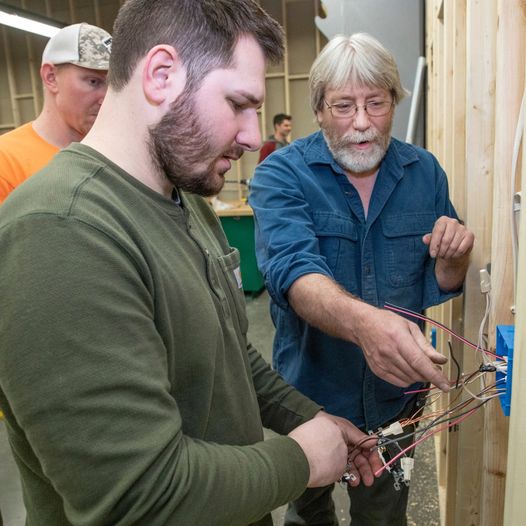
Nicci Pagan, Apprenticeship Coordinator at Gateway Technical College in Racine, Wisconsin, shared that while there are more apprenticeship programs than ever before, many students and families are still not aware of how these programs work, the costs associated with them, and the many types of jobs that can be secured after completion. Speaking from her own personal experience, Pagan shared that she wished she had been more aware of apprenticeship programs as a student and a single mother.
“An apprenticeship program would have been a fabulous solution for me to get my education while also earning a wage.” She made it her mission to educate as many people as possible in the state about the benefits of apprenticeship programs. “They are a great opportunity for individuals who don’t want to give up education to have a skill but need to be able to work as well,” said Pagan.
In Wisconsin, apprentices are generally required to complete coursework at a technical college, through a partnership between the apprenticeship program, employer, and the educational institution. “Apprenticeship programs are specifically designed to meet the needs of employers, so I think in the next five years, we’re going to continue to expand the trades in which we have apprenticeships in,” Pagan stated. “We’ll continue to expand and meet the needs of local businesses and employers as well as the apprentices themselves, as they’re learning and growing.”
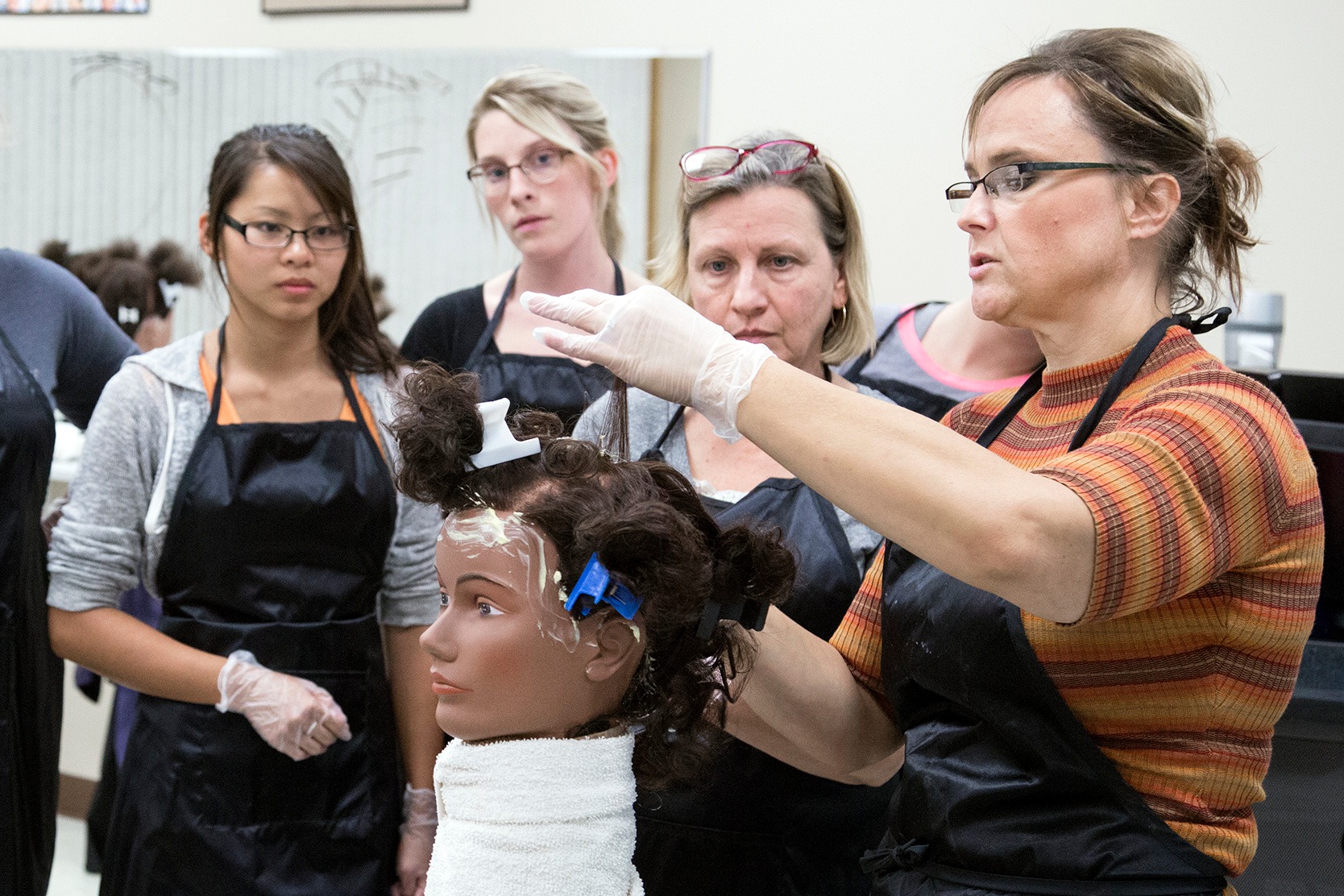
The Wisconsin College Savings Program knows that higher education takes many forms, that’s why its Edvest 529 and Tomorrow’s Scholar plans can be used for whatever comes after high school, including four-year universities, community colleges, trade, technical, or vocational schools, certificate programs, and apprenticeships.
If you are interested in pursuing an apprenticeship program, you can browse apprenticeship opportunities nationwide, searching by sector or location at www.apprenticeship.gov. Consult with your 529 college savings plan administrator to see if funds saved in a 529 plan can be used for apprenticeship expenses tax-free in your home state. Lastly, check with your area’s employers and technical/vocational colleges. They may have knowledge of current or upcoming apprenticeship opportunities in your community.
About the Authors:
Cheryl Rapp
serves as a College Investment Program Finance Officer with the Wisconsin Department of Financial Institutions, which oversees Edvest, Wisconsin’s 529 Plan. Edvest has been helping families save for education since 1997. Rapp has over 23 years of experience working for the State as the College Affordability Specialist prior to joining the College Savings Program. Her experience includes educating students, parents, teachers, and school counselors on the value of and how to complete the Free Application for Financial Student Aid. In her current role as College Investment Finance Officer for the Wisconsin 529 College Savings Program, Rapp manages outreach to Wisconsin residents. She works to increase awareness of the plans among Wisconsin residents while helping them begin saving for their children’s higher education. She is a graduate of the University of Wisconsin-Green Bay, from which she earned a bachelor’s degree in Humanistic Studies.
Chelsea Wunnicke
serves as a Wisconsin College Savings Program Finance Officer with the Wisconsin Department of Financial Institutions. With a background in delivering Financial Capabilities Outreach and Education with the University of Wisconsin Extension, Chelsea has expertise in helping families and communities envision financial inclusion and find strategies to improve their futures. Chelsea lives with her family in rural Richland County, Wisconsin, and has a special interest in helping more Wisconsin communities and youth benefit from early saving for higher education.